
Current signal: the American Academy of Dermatology’s July 22, 2026 weekly briefing flagged a practical question patients are already asking: is there a meaningful role for topical skin care products during GLP-1 use? The short answer is yes, but the value of topicals is often misunderstood. They can support comfort, hydration, barrier function, and the look of the skin surface. They usually cannot replace facial volume loss or solve every visible change created by rapid weight loss.
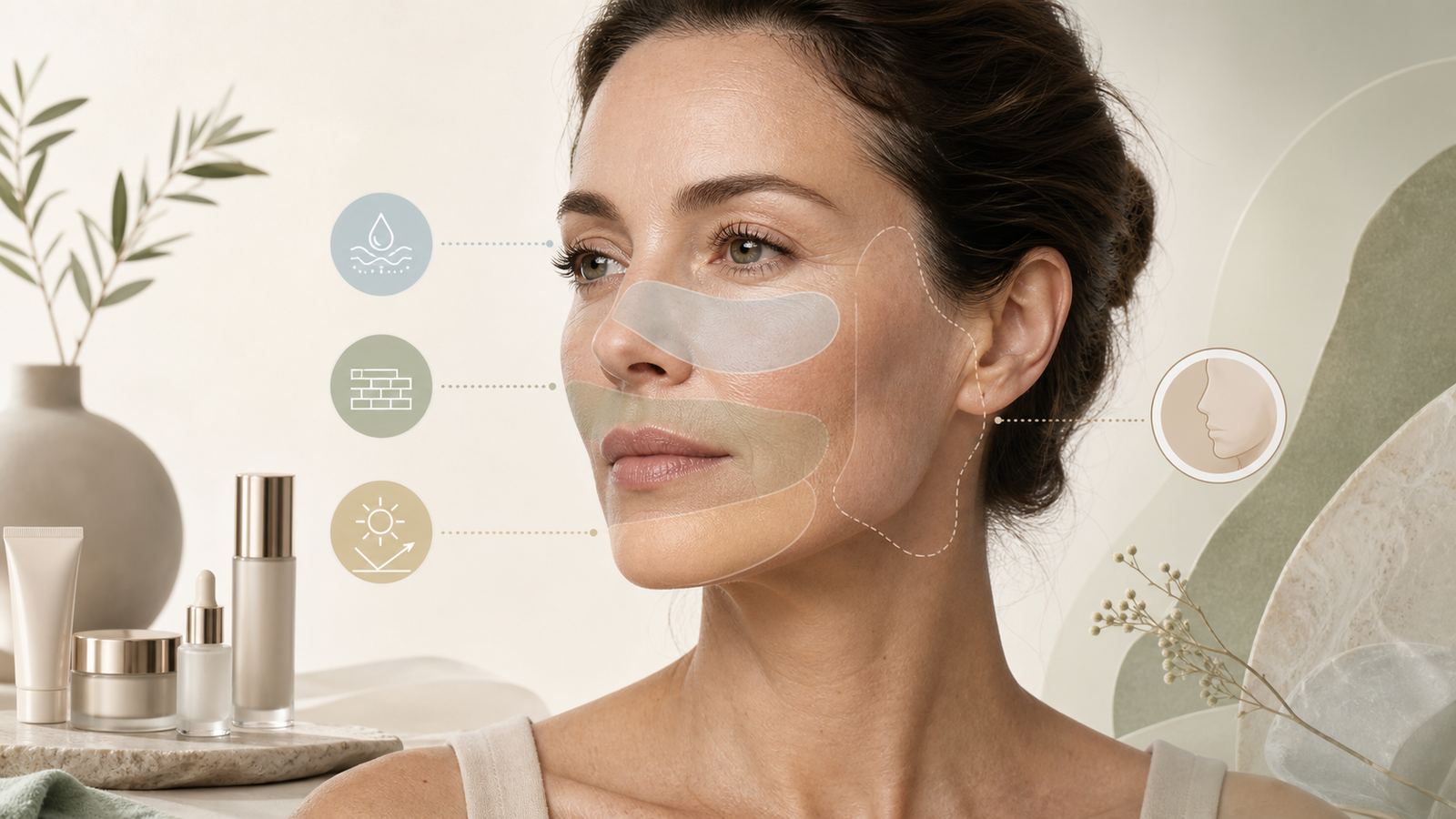
Why this became a current skincare topic in July 2026
GLP-1 medications moved quickly from specialist conversations into mainstream consumer language. As a result, the beauty and skincare side of the story also became louder. Some people started using these medications for obesity or diabetes and then noticed a face that looked drier, flatter, less rested, or simply older than expected. Others noticed irritation at injection sites, changes in sweating, hair shedding, or a routine that suddenly felt harsher than before. The dermatology conversation has had to catch up.
That is why the July 22, 2026 AAD DermWorld Weekly issue highlighting topical skin care products in the GLP-1 context is useful. It frames the question more responsibly than viral social media shortcuts. The right question is not “Which cream fixes Ozempic face?” The better question is: which changes are primarily topical, which are structural, and which deserve medical or professional evaluation instead of more product layers?
For SKINEGA, this is a strong editorial fit because the brand already argues for fewer variables, better product purpose, and less confusion between cosmetic support and medical claims. A current article about GLP-1 skin care products can be genuinely useful without pretending that a serum replaces nutrition, sun protection, slower weight-loss pacing, or expert assessment.
What skin changes are actually on the table during GLP-1 use
The AAD patient guidance is helpful because it keeps the list grounded. It notes that some people report dry skin, thinning hair, premature skin aging, acne breakouts, excessive sweating, irritation around the injection site, and loose skin that can rub and rash where skin touches skin. It also notes that some inflammatory skin conditions, such as psoriasis and hidradenitis suppurativa, may improve in some patients. That is already enough to show why one-size-fits-all skincare advice fails.
Some visible changes are likely tied to the pace and amount of weight loss. Others may be tied to appetite changes, lower fluid intake, lower calorie intake, changes in nutrient intake, and the everyday reality that when the whole body is adapting quickly, skin behavior often changes too. On top of that, people frequently add more products when they feel alarmed by the mirror. That can turn dryness into irritation, or tightness into a cycle of over-cleansing and over-treating.
In practical terms, the main skincare categories people ask about are not exotic. They are cleanser, moisturizer, sunscreen, retinoid, exfoliant, barrier serum, and the occasional volumizing or tightening topical. The usefulness of each depends on whether the skin currently needs quiet support or whether the person is expecting topical care to do a structural job it is not designed to do.
What topicals are actually good at
They can improve dryness, slip, and day-to-day comfort
The first obvious role for topical skin care products during GLP-1 use is barrier comfort. If the face suddenly feels tight, looks dull, or begins stinging with products that used to feel fine, a better cleanser and a more appropriate moisturizer can matter immediately. This is why the AAD explicitly recommends a gentle cleanser and a moisturizer that contains ceramides and antioxidants. Those are not glamorous interventions, but they are often the most effective because they address the skin that is actually in front of you today.
A calmer routine often means shorter ingredient exposure, less friction, and less ambition. Readers already exploring SKINEGA’s gentle vegan serum routine or the less-is-more skincare approach will recognize the logic: if the skin is unstable, stop treating it like a project. Topicals do their best work when they reduce noise rather than add it.
They can improve surface quality and reflected light
A good moisturizer or serum can make the face look healthier because hydrated skin reflects light more evenly. Texture may look less papery. Fine surface lines can appear softer. Tightness may drop. Makeup may sit better. Sunscreen tolerance may improve if the skin is not already irritated. These are meaningful outcomes. They are not trivial just because they sound modest.
Topicals can also support consistency. If a face feels more comfortable, the user is more likely to keep cleansing gently and using sunscreen regularly. That matters because UV exposure will not pause simply because the current beauty problem is GLP-1-related facial change. The AAD guidance still ends in sunscreen, and for good reason: if you want the skin to look calmer and more resilient, daily sun protection remains one of the highest-value habits in the entire routine.
What topicals are not good at
The biggest misunderstanding is volume. If someone has lost facial fullness through rapid weight loss, a topical product may improve the look of the skin that covers the face, but that is different from replacing lost support underneath it. Hydration can soften the surface. It cannot reliably rebuild the structural architecture of facial fat compartments. A richer cream can make a face look less depleted for the day. It does not mean the deeper issue has been reversed.
This distinction is not pessimistic. It is clarifying. A person who expects a moisturizer to solve structural change will either overspend, over-layer, or conclude that all skincare is useless. Neither response helps. The better framing is that surface care and structural care are different tools. Topicals may buy comfort, polish, and better skin quality. If the problem is marked facial deflation, laxity, or distress about contour changes, the next step may be slower weight-loss review with the prescriber, a dermatologist, or a qualified aesthetic professional, not simply another bottle.
Topicals are also not a safe shortcut around irritation. The AAD notes that retinoids may help with signs of aging, but they may also worsen irritation if dry skin develops during GLP-1 use. So the question is not whether retinoids are good or bad. It is whether the current barrier can tolerate them. The same caution applies to acids, scrubs, peel pads, and strong “resurfacing” routines that can look appealing when the face seems suddenly tired.
What the 2024 facial-aging review adds
The 2024 Aesthetic Surgery Journal review is important because it goes beyond loose consumer language and tries to explain why facial aging signals may look more complex than ordinary “I lost weight” logic. The authors describe the observed changes as multifactorial, involving loss of dermal and subcutaneous white adipose tissue, altered behavior of adipose-derived stem cells, and changes that may compromise the structural integrity and barrier function of the skin. That is a strong reason not to reduce the whole story to “just use a richer moisturizer.”
At the same time, the review does not justify a claim that every person on a GLP-1 will age visibly or that every facial change follows one mechanism. It is a literature review with a level-of-evidence ceiling. That means it is useful for mechanisms and clinical thinking, but it should not be translated into absolute promises. For a skincare routine, the key implication is simpler: if the face looks older because structure and skin quality are both changing, a topical can support only part of that problem.
This is where realistic language becomes protective. When an article says a product may help the appearance of hydration, radiance, or surface texture, it is leaving room for truth. When it says a product will reverse Ozempic face, it is crossing into marketing fantasy. SKINEGA should stay on the right side of that line.
What the 2026 cutaneous-biology review adds
The 2026 Dermatologic Surgery review indexed in PubMed broadens the picture further. It describes GLP-1 receptor agonists as having bidirectional effects on cutaneous biology. That matters because it helps explain why the skin conversation around these drugs feels contradictory. Some patients may see benefits in inflammatory skin conditions or wound-repair pathways. Others may encounter injection-site reactions, hypersensitivity eruptions, facial deflation, or skin laxity. Both sides can coexist in the literature.
Just as important, the review says the current evidence is strongest for mechanistic plausibility and observational clinical signals, while dermatology-specific randomized trials remain limited. In other words, we know enough to counsel patients carefully, but not enough to turn every skincare recommendation into hard certainty. That is the correct level of confidence for an editorial guide: clear enough to be useful, cautious enough to avoid pretending the science is finished.
For product selection, that uncertainty is a reason to simplify. When evidence is still evolving, one gentle change at a time is more rational than a reactive routine overhaul. A person can notice whether a cleanser is less drying, whether a moisturizer reduces tightness, whether sunscreen stings less, and whether a retinoid schedule remains tolerable. Those are real observable outcomes even while the deeper dermatology literature continues to mature.
What the 2026 topical study can and cannot prove
One of the most tempting questions is whether there is direct evidence that a topical product can improve the face during rapid GLP-1-related weight loss. The most relevant item here is the 2026 12-week open-label topical volumizing-cream study in adults with rapid weight loss, many of whom were using GLP-1 or GLP-1/GIP agonists. It enrolled 33 participants, 29 completed the study procedures, and the authors reported improvements in wrinkle appearance, ultrasound-based skin and subcutaneous thickness, hydration, elasticity, and transepidermal water loss.
That is encouraging, but it must be read carefully. First, it is a small open-label study, not a blinded comparison between multiple product types. Second, it used one branded multi-ingredient cream rather than proving that any volumizing topical category behaves the same way. Third, the outcomes combine appearance and biophysical measures, which is valuable, but still not the same as proving durable restoration of lost facial volume in every patient.
So what does the study actually support? It supports a measured claim that a thoughtfully designed topical may improve hydration, barrier metrics, skin feel, wrinkle appearance, and some objective surface-adjacent measurements in the context of rapid weight loss. That is a serious, useful role. It does not support the broader claim that skin care products can simply “fix” GLP-1 facial aging. The smartest way to use this evidence is as permission to invest in better surface care without pretending that structure no longer matters.
How to build a realistic GLP-1 skincare routine
Morning
Cleanse only if needed and keep the cleanser low-drama. If the skin is dry or sensitive, a lukewarm rinse plus a gentle cleanser may be enough. Then use a serum or moisturizer that improves slip and comfort rather than pursuing strong resurfacing. The 12-ingredient formula philosophy is relevant here because dry or reactive skin often benefits from fewer variables, not more novelty. Finish with broad-spectrum sunscreen SPF 30 or higher, exactly as the AAD recommends.
Evening
Remove sunscreen and makeup thoroughly but without chasing the squeaky-clean feeling. Reapply hydration and barrier support early rather than waiting until the skin feels desperate. If you use a retinoid, evaluate honestly whether the face is tolerating it. If the answer is no, reducing frequency or pausing is smarter than pushing through weeks of flaking just because anti-aging language sounds productive. If you are choosing between several active steps, pick one and let the barrier recover.
Weekly rhythm
A GLP-1 skincare routine often improves when the weekly pattern becomes calmer. Skip the reflex to over-exfoliate when the face looks tired. Avoid stacking new actives, a strong facial, a peel pad, and a retinoid restart in the same week. If an event is coming, the best facial before an event logic still applies: predictable calm usually photographs better than ambitious treatment. The same rule holds at home.

Where premium facials and professional care fit
A premium facial can help when the main goal is to improve comfort, glow, and surface quality without making the face more irritated. But the provider needs to understand the difference between dry, volume-changed skin and simply “dull skin that needs stronger treatment.” This is not the moment for aggressive exfoliation or heat-heavy stimulation just because the client feels visually under pressure.
A good professional conversation should separate barrier support from structural change. Hydrating masks, calmer massage, and conservative aftercare may help a client look more rested. They do not turn a facial into a substitute for volume restoration or dermatologic counseling. That distinction protects the client from disappointment and keeps the treatment honest.
For SKINEGA, this is also why the partner-link policy is intentionally skipped here. The article is not really about choosing a spa, a facial provider, or a Bangkok treatment venue. It is about current skincare logic during GLP-1 use. Forcing a partner anchor into this piece would weaken the editorial trust the article is trying to build.
When the next step should be a dermatologist, not another product
Topicals are consumer tools, not diagnostic tools. If the face develops a persistent rash, painful swelling, blistering, repeated hives, dramatic shedding, worsening injection-site reactions, or a change that no longer behaves like ordinary dryness, the answer is not endless product cycling. The same applies when you cannot tell whether you are seeing eczema, acne, allergy, rosacea, irritation from actives, or a medication-related issue. At that point the uncertainty itself is the reason to escalate.
The AAD page ends exactly where a responsible article should end: talk to a dermatologist when the problem is not responding to routine care. That is not anti-skincare. It is pro-clarity. A good dermatologist can help decide whether the routine should become simpler, whether an active should pause, whether a nutritional or hair-shedding issue needs a different workup, and whether any cosmetic procedure discussion is actually appropriate.
Conclusion: use topicals for support, not fantasy
GLP-1 skin care products do have a real role. They can reduce dryness, support barrier comfort, improve the look of the skin surface, and help a person keep a stable daily routine during a period of rapid change. That is a meaningful contribution. It can make the face look healthier, makeup sit better, and sunscreen feel easier to wear.
What topicals usually cannot do is fully replace lost volume, erase marked laxity, or single-handedly reverse every visible facial change associated with rapid weight loss. The most useful mindset is therefore layered rather than all-or-nothing: let skincare improve the part skincare is actually good at, and seek expert help when the real issue is structural, diagnostic, or emotionally significant. That is the premium answer because it is the honest one.
Frequently asked questions
What is the best skin care routine while using a GLP-1?
The most useful starting point is usually simpler, not more aggressive: a gentle cleanser, a moisturizer that supports comfort and barrier function, sunscreen every morning, and only one active step at a time if your skin is tolerating it. If the face is suddenly drier, tighter, or more reactive after weight loss or appetite changes, the routine often benefits from more hydration and less experimentation. Topicals are best at improving comfort, surface dryness, and the look of the skin barrier. They are not the main tool for restoring lost facial volume.
Can skin care products fix Ozempic face or GLP-1 facial volume loss?
Not fully. A topical product may improve hydration, skin texture, reflected light, and the overall quality of the skin surface, which can make the face look healthier. But visible facial deflation or laxity from rapid weight loss is usually a structural issue rather than a cream-only issue. Skin care may support the appearance of the skin over that structure, but it does not reliably replace volume or reverse every contour change. That is one reason professional consultation matters when the change feels significant.
Should I keep using retinoids if my skin becomes dry on GLP-1 medication?
Possibly, but only if the skin is tolerating them well. The AAD specifically notes that retinoids may help with signs of skin aging, yet they may also cause irritation and flaking if dry skin develops during GLP-1 use. In practice, many people do better by reducing frequency, shortening contact time, buffering with moisturizer, or pausing until the skin feels comfortable again. The right answer depends on whether the routine is stable or already tipping into stinging and peeling.
Do GLP-1 medications always make the skin look older?
No. Some people notice very little change, some mainly notice dryness or dullness, and others see more obvious changes in facial fullness, laxity, or texture after rapid weight loss. Current reviews suggest the picture is multifactorial and still incompletely studied. Weight-loss pace, baseline facial volume, age, nutrition, hydration, sun exposure, skincare habits, and overall health can all influence what the face looks like during treatment. That is why topical guidance should stay realistic and individualized.
When should I see a dermatologist instead of changing products on my own?
See a dermatologist if you develop a persistent rash, painful swelling, severe injection-site irritation, blistering, sudden hair shedding, intense itching, or a change that does not behave like ordinary dryness. It is also sensible to get expert help when you are unsure whether you are looking at barrier disruption, eczema, allergy, acne, nutritional stress, or something unrelated to the medication. Topical changes are easy to overdo when the real question is diagnostic.
Main sources
- American Academy of Dermatology - DermWorld Weekly
- American Academy of Dermatology - How can GLP-1 drugs affect my skin, hair, and nails?
- Aesthetic Surgery Journal - Decoding the Implications of GLP-1 Receptor Agonists on Accelerated Facial and Skin Aging
- PubMed - GLP-1 Receptor Agonists and Cutaneous Biology: Implications for Skin Disease and Longevity
- PMC - Topical Volumizing Cream Improves Facial Volume and Skin Health in Adults With Rapid Weight Loss