
In this guide: vegan skincare. Related care themes: organic skincare, face skincare, vegan skincare ingredients, natural skincare, cruelty-free skincare, skin barrier care, clean skincare claims.
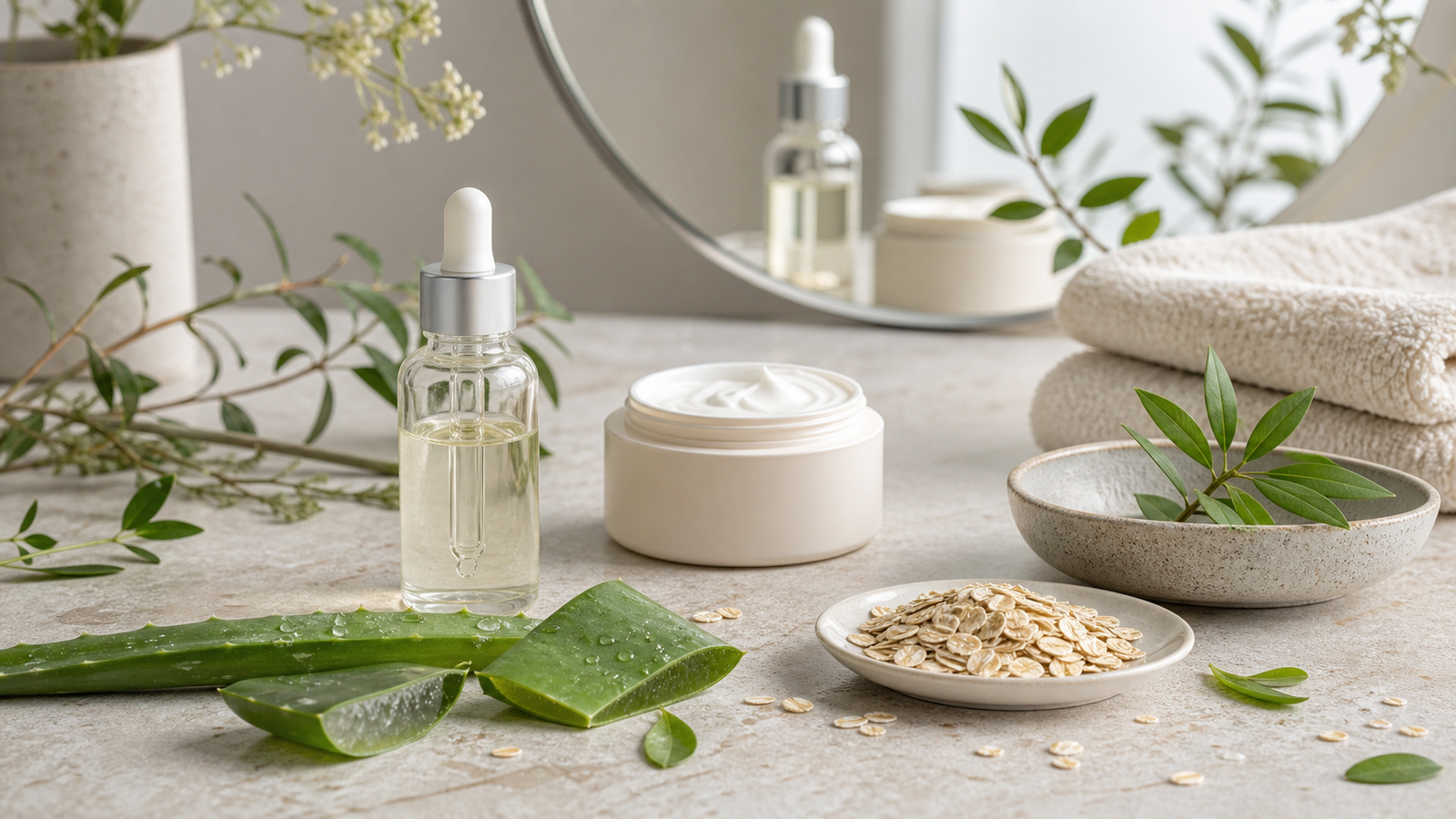
Why the labels get confused
Vegan skincare, organic skincare, natural skincare, clean skincare, and cruelty-free skincare are often used as if they mean the same thing. They do not. A vegan product can be synthetic, science-led, preserved, and not organic. An organic product can contain animal-derived ingredients. A natural product can still irritate skin. A cruelty-free claim can depend on region, testing policy, and supply chain detail.
This confusion is not only academic. It affects buying decisions, comparison pages, and the way people treat their faces. If a person believes organic automatically means gentle, they may tolerate essential oils or botanical extracts that their skin dislikes. If they believe vegan automatically means better, they may ignore formula stability, pH, preservation, or texture.
The confusion also creates weak content online. Many pages rank claims against each other as if the winner is obvious. A more useful guide separates ethical preference, sourcing preference, formulation quality, regulatory language, and skin tolerance. Those are different questions. A product can score well on one and poorly on another.
SKINEGA readers need a calmer framework: claims are starting points, not final proof. The face cares about ingredient function, dose, formula architecture, contamination control, skin type, barrier condition, and daily consistency. A label can express values, but the skin still responds to chemistry.
What vegan skincare actually tells you
Vegan skincare tells you that the formula avoids animal-derived ingredients such as beeswax, lanolin, collagen, carmine, milk proteins, or certain animal-derived forms of glycerin or squalane. It does not automatically tell you whether the product is cruelty-free, organic, fragrance-free, non-comedogenic, or suitable for sensitive skin.
A vegan formula can be excellent when it uses purposeful humectants, emollients, stabilisers, and preservatives. It can also be ordinary if the label is doing all the work. Ingredient purpose matters more than identity theatre. Hyaluronic acid, glycerin, niacinamide, panthenol, squalane, and well-designed moisturising systems can support skin without needing animal-derived materials.
Consumers should also remember that ingredient names do not always reveal sourcing at a glance. Glycerin and squalane, for example, may be plant-derived or otherwise sourced depending on the supplier. A transparent vegan skincare brand should be able to explain its sourcing standards without turning the explanation into fear-based marketing.
For a SKINEGA-style face skincare routine, vegan is most meaningful when it is paired with transparency. The brand should be clear about what the product does, what it avoids, who it suits, and how to use it. The best vegan skincare is not loud about purity. It is clear about function.
Ultra-detailed infographic
Claim Decoder: Vegan, Organic, Natural, Cruelty-Free
Use this decoder before trusting a front-label claim. Each term answers a different question.
Vegan
Question answered: does the formula avoid animal-derived ingredients? It does not automatically prove organic or cruelty-free status.
Organic
Question answered: do certain agricultural ingredients meet organic standards? It does not automatically prove low irritation.
Cruelty-free
Question answered: what is the animal testing policy? Check market rules, exceptions, and certification detail.
Barrier-friendly
Question answered: does the formula suit skin tolerance, hydration, pH, preservation, and daily use? This is the skin-first claim.
| Skin or claim signal | Best fit | Watch point | At-home support |
|---|---|---|---|
| Vegan | Ingredient origin | Check animal-derived ingredients | Does not equal organic |
| Organic | Agricultural sourcing | Check certification and percentage | Does not equal non-irritating |
| Natural | Marketing language | Ask for specific definition | Does not equal safe |
| Cruelty-free | Testing policy | Check market and certification | Does not equal vegan |
What organic skincare can and cannot prove
Organic skincare is more complicated because cosmetic products are regulated differently across markets and because organic certification may apply to agricultural ingredients rather than every part of a finished formula. The FDA explains that organic cosmetic claims intersect with USDA organic rules in the United States, while cosmetic labeling still has its own requirements.
Organic can be valuable when a consumer cares about farming standards, traceability, and certain ingredient sourcing choices. But organic does not automatically mean non-irritating, preservative-free, more effective, or medically safer. Poison ivy is natural. Essential oils are natural. Some plant extracts are useful; some are sensitising for certain people. The skin is not impressed by romantic language when the barrier is inflamed.
A balanced organic skincare page should therefore avoid both cynicism and worship. Organic is a sourcing and values signal. It is not a universal performance claim. The product still needs preservation, stability, compatibility with the skin, and evidence behind the function it promises.
Cruelty-free, animal testing, and claim discipline
Cruelty-free language can also become muddy. The European Commission states that the EU cosmetics framework includes bans on animal testing for finished cosmetic products and ingredients, with dates that reach back to 2004 and 2009. Other markets and product categories can differ. A brand claim should therefore be specific rather than decorative.
The FDA also notes that cosmetic labeling claims have limits and that it does not maintain a simple list of approved cosmetic claims. For consumers, the practical takeaway is to look for transparent policies, certifications where relevant, and plain wording. If a claim is vague, ask what it means in that market and for that supply chain.
This is where a brand can either build trust or lose it quickly. A careful brand defines the claim, shows the evidence it can show, and avoids implying that every alternative is unsafe or unethical. A weak brand relies on badges, fear language, or undefined purity. The difference matters because skincare is used repeatedly on the face, not purchased as a one-time slogan.
For readers, this is exactly the kind of distinction that makes an article more useful. The practical definition should be clear: vegan means no animal-derived ingredients; cruelty-free relates to animal testing policy; organic relates to agricultural production and certification; natural is not the same as safe.
A barrier-friendly routine using vegan or organic products
The best routine is not built by collecting labels. It is built by matching products to skin needs. Morning can be simple: gentle cleanse or rinse, hydrating serum if useful, moisturiser if needed, and sunscreen. Evening can be cleanser, one targeted treatment if tolerated, and moisturiser. This structure can be vegan, organic, both, or neither, depending on formulas.
For dry or tight skin, look for humectants and barrier-supportive textures. For oily skin, choose light hydration and non-heavy finishes. For sensitive skin, reduce fragrance and strong botanical blends even when they look natural. For acne-prone skin, avoid assuming that organic oils are automatically safer than well-designed lightweight moisturisers.
Internal SKINEGA reading can help sharpen the decision. Start with Vegan Skincare Ingredients, compare claim discipline in The Hypocrisy of Organic Skincare, and revisit Skincare Terms Need Evidence. The point is not to reject values. The point is to make values useful to the skin.
FAQ: vegan skincare
Is vegan skincare the same as organic skincare?
No. Vegan skincare avoids animal-derived ingredients. Organic skincare relates to how certain agricultural ingredients are produced and certified. A product can be vegan without being organic.
Is organic skincare better for sensitive skin?
Not automatically. Organic ingredients can still irritate sensitive skin, especially fragrant botanicals or essential oils. Sensitive skin needs low-friction, well-tolerated formulas.
Does cruelty-free mean vegan?
Not necessarily. Cruelty-free usually refers to animal testing policy, while vegan refers to ingredient origin. A product can be one, both, or neither depending on the formula and policy.
What is the most important skincare claim?
For the skin itself, the most important claim is whether the formula is well suited to your barrier, tolerance, and daily routine. Values claims are useful when they are specific and transparent.