
The headline version of regulation news is usually too blunt to help. Acne shoppers do not need a scare story. They need a cleaner way to separate claims, product category, quality control, and the routine decisions that still make sense today.
Short answer: The July 16, 2026 FDA acne warning letter did not say that every acne product is dangerous or recalled. It said one manufacturer had both product-quality concerns and labeling claims that pushed certain products outside the OTC acne rules, which matters because dramatic promises, contamination headlines, and sound manufacturing are separate questions that shoppers often blur together.

What actually happened on July 16, 2026
Reviewed September 14, 2026. This guide explains the July enforcement action; the review date does not indicate a new warning or recall. The primary document is the July 16, 2026 FDA warning letter to Island Kinetics, Inc. d.b.a. CoValence Laboratories. That distinction matters because many social summaries jump straight from “FDA” to “danger” without explaining whether the agency is discussing contamination, labeling, manufacturing controls, or all three at once.
In this case, FDA described both manufacturing violations and product-label issues. The letter says the agency inspected the Chandler, Arizona facility from January 14 to January 23, 2026, then cited current good manufacturing practice concerns around process validation, cleaning validation, validation of a system whose identity is redacted in the published letter, and out-of-specification investigations.
The same letter also focused on what certain products were allowed to claim. FDA said TreeActiv Cystic Acne Spot Treatment, Ayadara Warrior Two Acne Spot Treatment, and Skin Script Cranberry Turnover Peel were being marketed in ways that made them drugs under the law, not just ordinary cosmetics. For the two spot treatments, FDA said the labeling did not fit OTC acne monograph M006.
The repeat-history detail is also worth noticing. FDA said similar CGMP violations had already been cited at the facility during inspections in 2016 and 2020, and the agency described executive-management oversight as inadequate. That makes this page more than a one-line claims story. It is also a quality-systems story.
Why claims matter as much as ingredients
A lot of acne marketing teaches consumers to think first about the active ingredient and only later about the promise on the tube. Regulation works the other way around. The FDA’s cosmetic-versus-drug guidance says intended use determines whether a product is regulated as a cosmetic or a drug, and that intended use is often established through the claims on the label or in advertising.
That is why the July 16 warning letter focused so closely on phrases tied to “cystic,” “severe,” and “hormonal” acne. The issue was not simply that the products contained acne-style actives. It was that the claims implied a therapeutic scope that FDA said went beyond the permitted OTC acne indications.
This is also why SKINEGA keeps returning to claim discipline in articles such as Free From Skincare Lists and The Future of Clean Skincare. Inflated language does not only confuse shoppers. It can blur the line between cosmetic presentation and drug-style promises.
What OTC monograph M006 is trying to do
The FDA’s June 2011 topical-acne guidance explains the historical ingredient and labeling framework. It is background guidance, not the text of the current M006 order. The July 2026 warning letter separately identifies M006 as the monograph relevant to the products discussed. Readers evaluating a specific product should distinguish that current enforcement finding from an older explanatory document.
For acne, that means the retail lane is narrower than a lot of premium marketing suggests. FDA’s guidance lists benzoyl peroxide at 2.5 to 10 percent, salicylic acid at 0.5 to 2 percent, and sulfur at 3 to 10 percent as permitted single-actives, with two sulfur-resorcinol combination options and required warnings and directions. Those details are dry, but that dryness is exactly the point: retail acne treatment is meant to stay standardized enough that the shopper is not buying pure improvisation.
For routine users, the practical takeaway is simple. When you are buying an OTC acne treatment, the reliable signs are usually the least glamorous ones: a standard Drug Facts panel, a familiar active, clear directions, and a claim that sounds proportionate to retail treatment rather than like a cure.
Reader guide
How to Read an Acne Warning Letter Without Overreacting
A regulatory letter becomes more useful when you split it into four consumer questions: what kind of product it is, what it claims to do, whether it fits OTC rules, and whether there is a separate quality or contamination issue.
Start with the product category
If the intended use is to treat acne, the formula may be regulated as a drug, not only as a cosmetic, even when the packaging still looks like skincare.
Read the promise, not just the bottle
Claims about severe, cystic, or hormonal acne can change the regulatory risk profile because they imply a stronger therapeutic use than a routine cosmetic claim.
Separate claims from quality control
A warning letter can address manufacturing controls, labeling, or both. A dramatic headline may hide which problem actually triggered the action.
Do not confuse a letter with a recall
A warning letter is not automatically a retail recall or a consumer stop-use order. The next step depends on what FDA specifically found and what the brand does in response.
| Signal | What to check | Why it matters | Smart next step |
|---|---|---|---|
| You see “cystic” or “severe” acne promises | Check whether the product has standard OTC Drug Facts language and realistic, monograph-style indications. | The claim may be stronger than the allowed OTC acne category. | Do not assume “stronger” means “better regulated.” |
| A headline mentions contamination | Look for whether FDA issued a recall, a safety alert, a warning letter, or only a quality reminder. | Those actions answer different questions and imply different levels of urgency. | Follow the exact product and lot guidance rather than social reposts. |
| A product is drying or stinging badly | Step back, simplify the routine, and compare the active with your barrier tolerance. | Irritation can come from overuse even when the active itself is common and legitimate. | Reduce overlap before blaming every ingredient. |
| Breakouts are painful, scarring, or not improving | Move from self-directed shopping to professional care. | Acne that is deep, persistent, or leaving marks often needs a plan beyond retail skincare. | Use regulation news as context, not as a substitute for diagnosis. |
This is not the same story as the 2025 benzene acne recalls
Acne headlines have already trained many readers to think of one risk first: benzene contamination in benzoyl peroxide products. That was a separate FDA action. In its March 11, 2025 benzene update on acne products, FDA said it had tested 95 benzoyl peroxide products, found six with elevated benzene, and noted that more than 90% had undetectable or extremely low levels.
That is important context because the July 16, 2026 warning letter will inevitably be folded into the same fear stream online. But the two stories answer different questions. The 2025 alert was about contamination testing in specific products and retail-level recalls. The 2026 warning letter was about manufacturing controls and claim compliance at a particular facility.
This distinction helps readers avoid abandoning every useful topical at once. If a story is about claim scope, that does not mean every benzoyl peroxide cleanser is suddenly suspect. Better judgement starts by asking what problem the regulator is actually describing.

What a calmer, smarter acne routine looks like now
A regulation story becomes useful only when it changes behavior intelligently. For most readers with mild acne, that does not mean panic shopping. It means simplifying. The current DermNet acne-treatment page still points to familiar nonprescription options such as benzoyl peroxide, mild salicylic acid preparations, and azelaic acid, while also warning that severe irritation is a reason to stop and seek advice.
The AAD’s acne treatment guidance helps sharpen that further. It describes benzoyl peroxide as reducing acne-causing bacteria, salicylic acid as opening clogged pores, and azelaic acid as a treatment that can also help the dark marks that linger after a breakout. That is a more grounded way to compare products than chasing language about “cystic” or “severe” acne on a premium-looking tube.
In practice, the cleaner acne routine is often built around one clear treatment active, a gentle cleanser, enough moisturizer to protect the barrier, and sunscreen. That aligns well with our existing guides to facial care for acne-prone skin, skin barrier repair, and dermatologist-recommended ingredients.
Premium shoppers also make a hidden mistake here: they assume a more expensive acne product must be more thoughtful or more compliant. Price answers none of those questions.
Why this matters for spas, facial studios, and premium skincare clients
SKINEGA’s audience is not limited to pharmacy-aisle acne shoppers. Many readers are also facial clients, spa visitors, or people mixing professional treatments with home care. For that group, the warning letter has an extra lesson: treatment menus and retail shelves should not reward overstatement. If a client has acne-prone skin, the smartest provider usually calms the routine down rather than layering excitement onto already reactive skin.
For readers who like to interpret market signals through broader product literacy, this warning letter belongs in the same evidence-aware conversation as our coverage of plastics in personal care products: identify the exact question first, then decide whether your routine needs a real change or only a more precise understanding.
A practical check before changing your routine
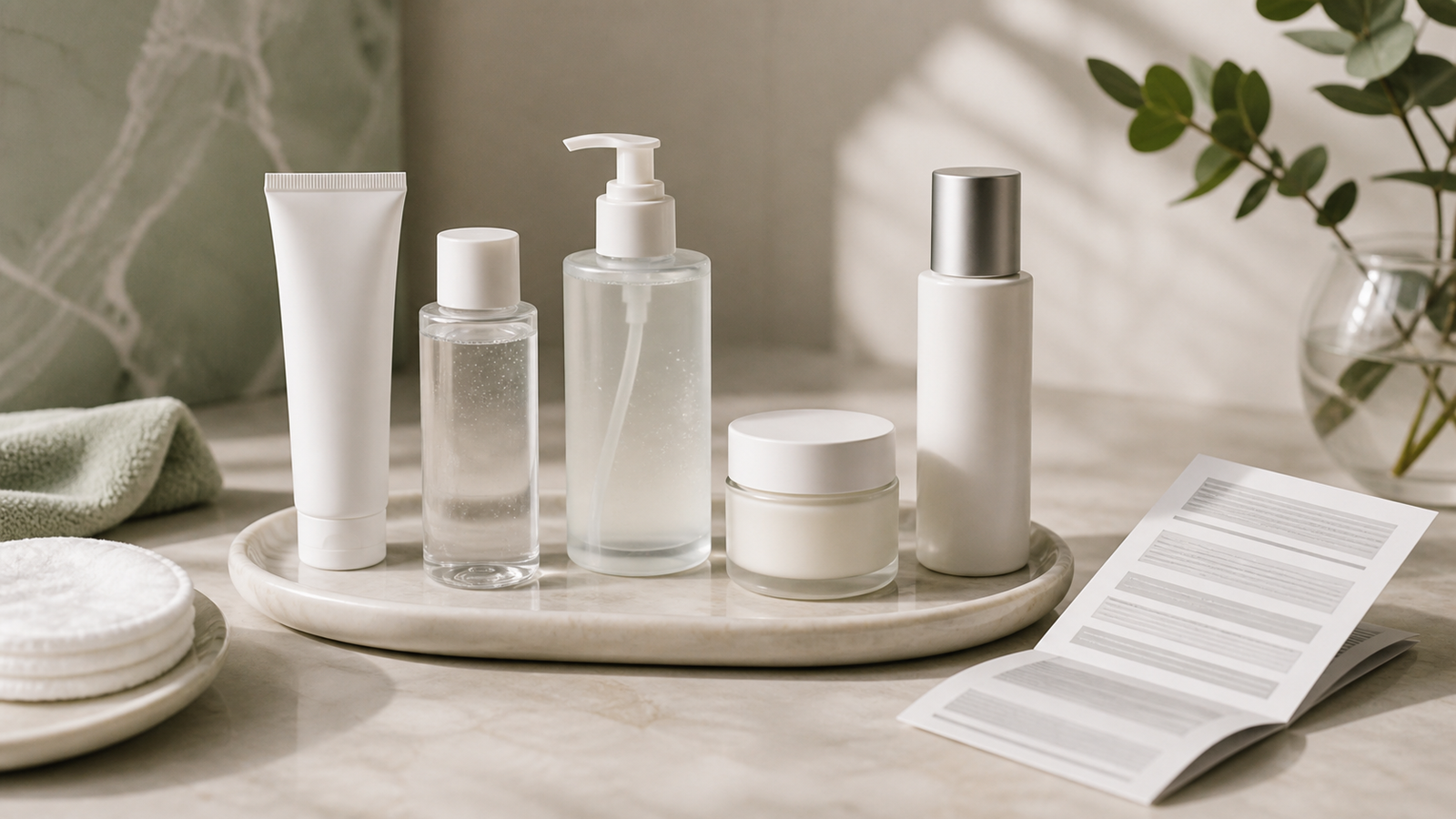
Start with identification rather than interpretation. Put the product beside its box, photograph the complete label, and note the exact product name, active ingredient, strength, lot code, and expiry information where supplied. Keep the seller receipt if you have it. These details give a pharmacist or the manufacturer something specific to check; a cropped screenshot of a brand name does not. This is a practical record-keeping suggestion, not evidence that your particular bottle is affected.
Next, open the original notice and compare its scope with that record. Does it name the product, a manufacturing facility, or particular lots? Does it describe a labeling issue or explicitly provide recall instructions? Follow any product-specific instructions in the official notice. If the match is unclear, ask a pharmacist or the manufacturer to clarify it before guessing that the entire brand is either cleared or unsafe. A Drug Facts panel is useful information, but its presence alone cannot establish that manufacturing controls are adequate.
Finally, separate that product check from decisions about your skin. A hypothetical shopper might discover that a shared headline concerns a different product while still finding their own routine irritating. Those are two different reasons to seek advice. Record when discomfort started and which products were introduced, rather than adding another active to compensate. If irritation is severe, stop the irritating product and obtain medical advice; DermNet includes stopping for severe irritation in its acne-care guidance.
For readers shopping in Bangkok, this article describes a United States regulatory notice. Do not assume a local product has identical ingredients or labeling simply because its name looks similar. Bring the actual packaging to a local pharmacist when checking suitability and directions. The aim is a traceable decision about the bottle you own, with professional help when needed, rather than a conclusion drawn from a headline about another market.
The measured takeaway
The July 16, 2026 FDA acne warning letter matters because it exposes two consumer blind spots at the same time. Shoppers often treat bolder acne promises as evidence of stronger legitimacy, and readers often collapse every FDA acne headline into one generic fear story even when contamination, labeling, and manufacturing quality are different issues.
A better response is slower and more useful. Read the product category. Read the promise. Read the Drug Facts panel. Use one strong variable at a time. Regulation news is most valuable when it sharpens judgement, not when it replaces it.
FAQ
What is an FDA warning letter for acne products?
An FDA warning letter is a formal notice saying the agency believes a company has violated the law and must correct the problem. In acne care, that may involve manufacturing controls, contamination risk, listing problems, labeling claims, or a mix of those issues. It is not the same thing as a recall notice, and it does not automatically mean every product from that company poses an urgent consumer-level danger.
Does this warning letter mean all acne spot treatments are unsafe?
No. The July 16, 2026 FDA letter focused on one manufacturer and specific products. It combined two different findings: manufacturing concerns and labeling claims that FDA said did not fit the permitted OTC acne framework. That is not the same as saying every benzoyl peroxide gel, salicylic acid solution, or acne cleanser is dangerous. The better takeaway is to read acne-product claims more critically.
How is a warning letter different from the 2025 benzene acne recalls?
They address different problems. FDA’s March 11, 2025 acne recall update was about benzene contamination testing in benzoyl peroxide products. The July 16, 2026 warning letter addressed a manufacturer’s quality systems and certain acne-labeling claims. One issue is contamination testing; the other is manufacturing discipline and claim compliance. Those categories often get blended online, but they should not be treated as the same signal.
What should I look for when buying an OTC acne product?
Start with a clear active and a realistic job description. For mild acne, common OTC options often center on benzoyl peroxide or salicylic acid, with some routines also relying on azelaic-acid or barrier-support logic. For a product marketed as an OTC acne drug in the United States, look for its Drug Facts panel, avoid miracle language, and do not stack too many drying steps at once. If severe irritation develops, stop and simplify.
When should acne stop being a retail-skincare problem and become a medical appointment?
If acne is painful, nodular, widespread, leaving scars, not improving after a reasonable trial of routine care, or recurring in a way that feels hormonal or inflammatory, it is time for professional guidance. The same is true for severe or unusual product reactions. Retail acne skincare can help mild cases, but it is not a replacement for diagnosis or a treatment plan for persistent acne.
Main sources
- American Academy of Dermatology - DermWorld Weekly roundup for August 5, 2026 (login may be required)
- US FDA - Island Kinetics, Inc. d.b.a. CoValence Laboratories warning letter (July 16, 2026)
- US FDA - Is It a Cosmetic, a Drug, or Both? (Or Is It Soap?)
- US FDA - Topical Acne Drug Products for Over-the-Counter Human Use
- US FDA - March 11, 2025 acne benzene recall update
- American Academy of Dermatology - Acne: Diagnosis and treatment
- DermNet - Acne treatment