
In this guide: skin barrier repair routine. Related care themes: skin barrier repair, damaged skin barrier, sensitive skin routine, skincare routine for sensitive skin, barrier repair skincare, premium facial for sensitive skin, how to repair skin barrier.
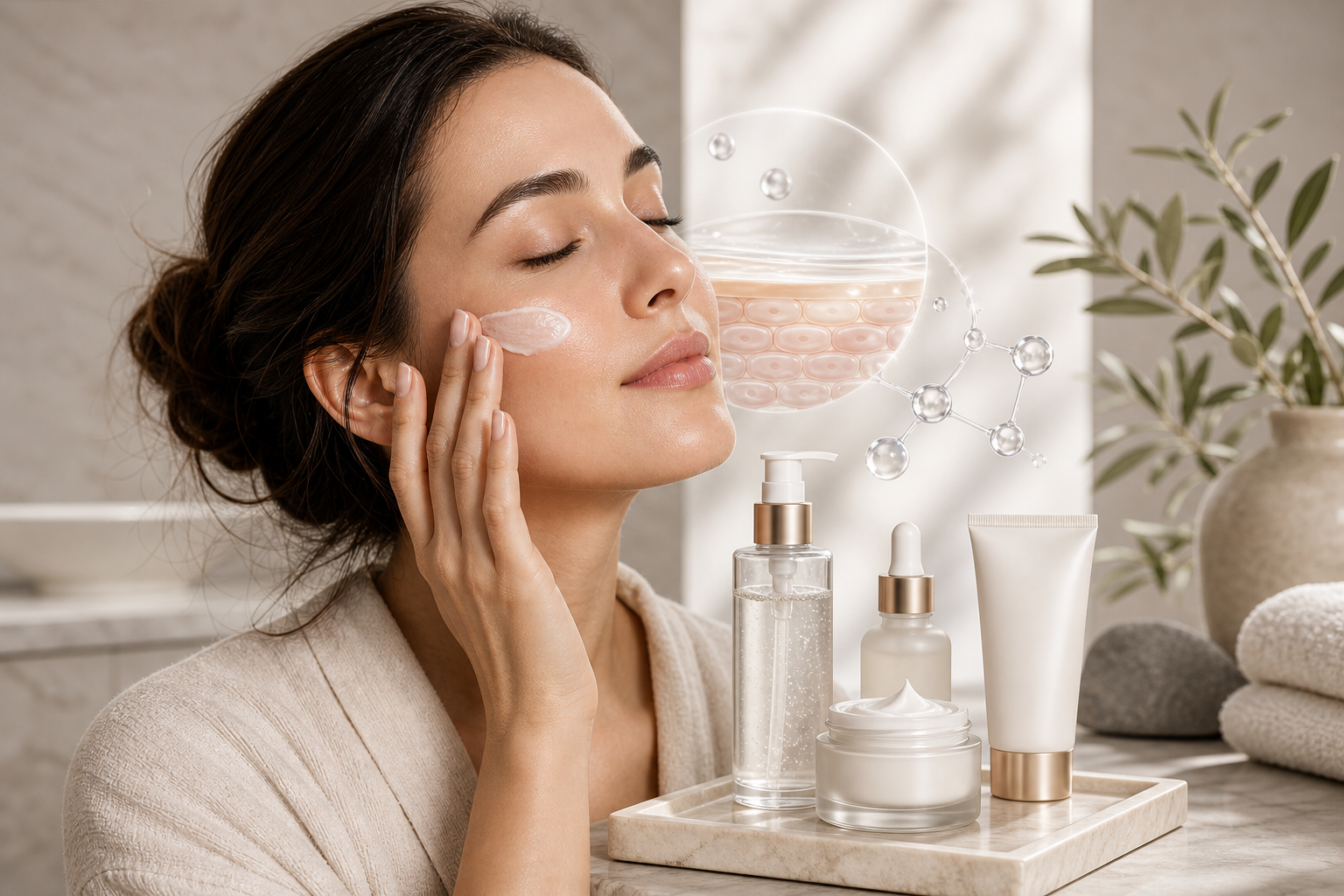
Why barrier repair deserves its own routine
A damaged or stressed skin barrier is one of the simplest explanations for why skin suddenly feels wrong even when the product shelf looks expensive. The face may sting when moisturizer is applied, feel tight after cleansing, flush more easily, react to products it once tolerated, or look shiny and dehydrated at the same time. People often describe this moment as sensitive skin, but what they are really noticing is reduced tolerance.
DermNet describes the skin barrier as part of the system that limits water loss and reduces the entry of irritants, allergens, and microbes. When that outer protective structure is disrupted, the face no longer behaves like stable skin. It becomes noisier. It loses comfort faster. It over-responds to products, weather, friction, cleansing, and even well-meaning skincare routines.
This is why a skin barrier repair routine should not be treated as a side note or trend phrase. It is often the most practical answer when the skin is tired, over-processed, post-travel, or overloaded with exfoliants and actives. Repair does not mean perfection. It means restoring enough comfort and predictability that the skin can tolerate a normal routine again.
What a stressed barrier actually looks like
Sensitive skin is a useful description, but DermNet is careful to note that it is a lay term rather than a formal diagnosis. In everyday life, that matters. A person may say their skin is sensitive when they really mean it burns after cleanser, goes red after showering, becomes flaky around the mouth, or feels raw after using acids, retinoids, scrubs, or heavily fragranced products.
Common signs of barrier stress include dryness that returns quickly after washing, patchy flaking, roughness, tightness, soreness, reactive redness, an increase in stinging, or the strange combination of oiliness on the surface and dehydration underneath. Barrier damage can also make normal steps feel suddenly too strong. A serum that once felt elegant starts to tingle. A facial massage that used to feel soothing starts to create heat.
The important correction is that this does not always mean the skin needs a stronger fix. It may simply need a quieter week. When chemical or physical stress reaches the skin faster than the skin can repair itself, irritation wins. The premium move is not to dominate the skin. It is to remove enough pressure that repair can resume.
The barrier reset principle: stop, simplify, cushion, protect
Barrier repair begins with editing, not shopping. Stop the steps that most often create unnecessary drag: over-cleansing, multiple exfoliants, rough towels, cleansing brushes, hot water, over-frequent masking, or the habit of layering several active categories because each one sounds useful on its own. The skin rarely benefits from chaos, even if the chaos is expensive.
Simplify the core routine to what the face can realistically tolerate. That often means a gentle cleanser, a moisturizer that matches the skin type, and daily sunscreen. The American Academy of Dermatology consistently centers these basics because they solve the structural problem: cleansing removes residue without excessive stripping, moisturizer supports water retention and comfort, and sunscreen limits the ongoing UV stress that keeps recovery fragile.
Cushioning matters as much as ingredient labels. A product can be fragrance-free and still feel wrong if the texture encourages over-rubbing or if the user applies too many layers to skin that is already irritated. Barrier repair is physical as well as chemical. Less scrubbing, less heat, softer application, and better timing often matter more than finding a dramatic miracle ingredient.
Barrier-first framework
Barrier Reset Checklist
When skin tolerance drops, these are the moves that usually help most quickly and safely.
Strip less
Use a gentle cleanse only when needed, reduce heat, and stop chasing the squeaky-clean feeling.
Moisturize on purpose
Choose a texture your skin will actually tolerate twice a day and apply it with minimal rubbing.
Protect daily
Barrier repair is incomplete without broad-spectrum SPF because UV keeps sensitive skin in recovery mode.
Reintroduce slowly
Bring back acids, retinoids, or stronger treatments one at a time only after comfort has stabilized.
| What you notice | Best move now | Watch point | When to restart stronger steps |
|---|---|---|---|
| Stinging after washing | Reduce cleanser strength and frequency | Hot water and over-rubbing | Once skin feels calm for several days |
| Flaky, tight skin | Increase moisturizer consistency | Stacking too many actives at night | Restart one active at low frequency |
| Shiny but dehydrated skin | Use lighter hydration, not zero hydration | Assuming oil means the barrier is fine | Add targeted treatment slowly |
| Post-facial or post-travel irritation | Simplify to cleanse, moisturize, sunscreen | Trying to “boost” glow with acids immediately | Wait until the skin feels predictable again |
Morning routine: do less, but do it reliably
A strong barrier-repair morning routine is quiet. If the skin is not oily or dirty on waking, a lukewarm water rinse may be enough. If cleansing is needed, use a gentle cleanser and remove it without friction. Avoid the feeling that the face must be squeaky clean before it can be healthy. That stripped feeling is often the start of the day going wrong.
Next comes moisture. The moisturizer does not need to look “medical” or trendy. It needs to reduce discomfort, support flexibility, and sit well under sunscreen. The AAD moisturizer guidance is useful here because it treats moisturizer choice as a fit problem rather than a status problem. Dry skin may need richer textures. Oily or combination skin may prefer lighter creams or lotions that still protect the barrier.
Sunscreen is part of barrier repair, not a separate cosmetic category. If the barrier is stressed and UV exposure continues daily, the skin never gets a full recovery window. A broad-spectrum sunscreen with SPF 30 or higher is the conservative standard the AAD keeps returning to, and it belongs here even if the routine is otherwise minimalist.
This is also the stage where readers can revisit Skin Science: Why Less Is More. Barrier repair succeeds when the morning routine feels repeatable. A routine that is too crowded usually fails before the skin improves.
Evening routine: repair before ambition
Evening is where many people accidentally restart the problem. They cleanse, then add exfoliating pads, retinoids, acids, spot treatments, masks, and extra layers because nighttime feels like the place to “work on” the skin. But when the barrier is compromised, repair before ambition is the better sequence.
Use a gentle cleanse that removes sunscreen and makeup fully without repeated rubbing. Pat the skin dry or leave it slightly damp, then apply a moisturizer or barrier-supportive serum and cream combination that the face already tolerates. If a serum makes the skin feel sharper, tighter, or warmer, skip it. Repair is not the week to prove tolerance through discipline.
The AAD advice for dry and eczema-prone skin also aligns well with this approach: shorter lukewarm bathing, prompt moisturizing, and reducing exposure to irritants. Even if a reader does not have diagnosed eczema, the logic still helps. Moisture retention is easier when the skin is not exposed to long hot showers and aggressive cleansing at the end of the day.
Readers who want a product-language refresher can cross-check ingredient choices with Vegan Skincare Ingredients. The label matters less than whether the product helps the skin stay calm for several consecutive nights.

What to pause while the skin is recovering
Barrier repair is not anti-active forever. It is anti-bad timing. If the skin is stinging, rough, tight, or visibly reactive, this is usually the moment to pause exfoliating acids, retinoids, strong acne spot treatments, frequent scrubs, cleansing brushes, and anything that reliably creates heat or peel-like discomfort. Pausing is not giving up. It is removing variables.
Fragrance, essential oils, and highly sensory treatments can also become more noticeable on stressed skin, especially when tolerance is already reduced. That does not make every fragrant product “bad.” It simply means that a barrier-repair week is usually not the right week to test how much stimulation the skin can manage.
The hardest part for many skincare enthusiasts is not the product change but the ego change. Barrier recovery is less cinematic than a peel, less glamorous than a new serum launch, and slower than marketing. Yet it is often the phase that makes every later active work better. Repair creates the conditions that allow ambition to return intelligently.
Case study: the premium facial for skin that cannot handle another hard reset
Imagine a reader arriving in Bangkok after work travel, heat exposure, poor sleep, air-conditioned flights, and a few nights of over-exfoliating because the skin looked dull. By day three, the face feels warm, shiny, dehydrated, and irritable. The person still wants to look polished for meetings or dinner. The wrong answer would be an aggressive peel, hard extraction, or a performance facial built around instant drama.
A better premium facial starts with diagnosis and restraint. Gentle cleansing, cool or neutral room pacing, minimal friction, barrier-supportive textures, and a therapist who understands when not to exfoliate are what restore value. In that context, mentioning a reference point such as best facial bangkok is reasonable because the article is discussing the type of calm, high-end facial environment that suits a stressed barrier. The point is not the city alone. The point is the standard of care.
This is also where readers may want to compare the logic with Best Facial for Your Skin and Facial Lymphatic Drainage for Glow Skin. When the barrier is shaky, the best facial is usually the facial that does less and finishes with more comfort, not the facial that advertises the most steps.

How oily, mature, and tired skin change the routine
Oily skin still needs barrier repair. One of the most common mistakes is to assume shine means the skin needs stronger cleansing and less moisturizer. In reality, oily skin can still be dehydrated and irritated. The better adjustment is usually lighter textures, not zero moisture. Gel-cream or lotion textures may work well if they keep the face comfortable without feeling heavy.
Mature skin often benefits from richer support because barrier function, dryness, and visible fragility can increase with age. That does not mean the routine should become complicated. It means texture and consistency matter. A moisturizer that feels nourishing and actually gets used twice a day is better than a more impressive formula that sits on the shelf because it pills or irritates.
Tired skin, including travel skin or event-week skin, often looks worse when people chase radiance too aggressively. A calmer barrier routine, good sleep, water, a modest facial massage if the skin tolerates it, and sunscreen the next morning will usually deliver a more believable glow than over-correcting with acids. This is the same discipline behind The Future of Clean Skincare: fewer claims, stronger execution.

When to stop self-adjusting and ask a professional
A barrier-repair routine is for cosmetic irritation and sensitivity, not for every skin problem. If redness is intense or persistent, swelling is sudden, the skin is oozing, pain is escalating, a rash is spreading, or a reaction is tied to a procedure or medication, it is time for professional advice rather than more home experimentation.
The same applies if a person repeatedly “repairs” their skin only to trigger the same crash every few weeks. At that point the issue may be a product allergy, contact dermatitis, rosacea pattern, eczema tendency, or simply an active routine that is too ambitious for the face in front of them. Premium skincare becomes more credible when it knows its limit and does not pretend every problem is a shopping problem.
Repair should feel progressively calmer over days, not more dramatic. If the face is not trending toward comfort, that is data worth respecting.
Conclusion: the luxury is tolerance
A skin barrier repair routine is not a detour from good skincare. It is one of the clearest expressions of good skincare. Cleanse gently, moisturize consistently, protect from sun, pause what is inflaming the skin, and reintroduce ambition slowly. That formula sounds simple because it is. The challenge is respecting it long enough to let the skin respond.
For SKINEGA, luxury is not the loudest shelf or the strongest treatment name. Luxury is tolerance: skin that feels comfortable, behaves predictably, and can accept the right level of care without constant drama. If your face feels tired, over-processed, sensitive, or strangely reactive, start with the barrier. Most of the time, the skin will tell you very clearly when you have finally stopped fighting it.
FAQ: skin barrier repair routine
How long does a skin barrier repair routine take?
Mild irritation may feel better within a few days, while more stressed skin can take several weeks of consistent gentle care. The goal is steady improvement in comfort, not overnight perfection.
What should I stop using when my skin barrier is damaged?
Pause the steps most likely to add irritation, such as exfoliating acids, retinoids, scrubs, harsh cleansers, cleansing brushes, and strongly fragranced or highly active experiments.
Do I still need moisturizer if my skin is oily?
Yes. Oily skin can still be dehydrated and barrier-stressed. The better move is usually a lighter texture, not skipping moisturizer entirely.
Can I get a facial while repairing my skin barrier?
Yes, but only if the facial is gentle, diagnosis-led, and clearly barrier-friendly. Avoid aggressive peels, heavy extraction, and any treatment that leaves the skin hotter, tighter, or more reactive.
When should I see a dermatologist instead of trying home repair?
Seek professional advice if redness is intense, swelling is sudden, the skin is painful or oozing, a rash is spreading, or the same irritation cycle keeps repeating despite simpler care.
Editorial sources and further reading
- American Academy of Dermatology - Dermatologists' top tips for relieving dry skin
- American Academy of Dermatology - How to pick the right moisturizer for your skin
- American Academy of Dermatology - Sunscreen FAQs
- DermNet - Skin barrier function
- DermNet - Sensitive skin
- American Academy of Dermatology - Atopic dermatitis skin care