
In this guide: vegan skin care. Related care themes: vegan skincare, cruelty-free skincare, plant-based skincare, vegan skincare ingredients, skin barrier routine, clean beauty claims.
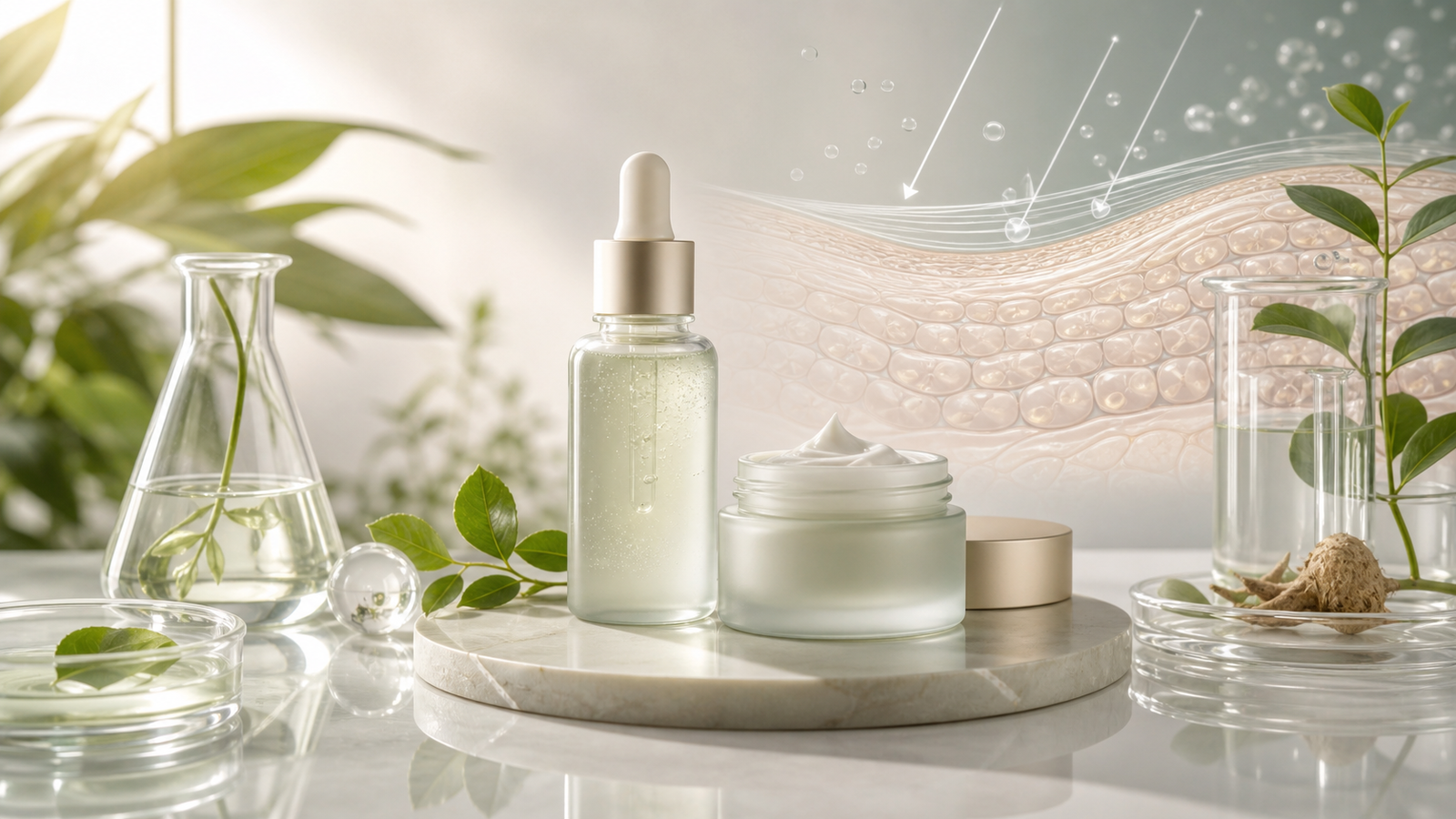
The simple definition: vegan skin care is about ingredient origin
Vegan skin care means that a cosmetic formula is made without ingredients derived from animals. In practical shopping terms, that usually means no beeswax, honey, lanolin, collagen sourced from animals, keratin from animal sources, carmine, silk derivatives, milk proteins, animal-derived glycerin, animal-derived squalene, or similar materials. The word vegan describes what is not in the formula and, depending on the certification, what was not involved in development or manufacture.
This sounds simple until you stand in front of a shelf full of claims. Vegan does not automatically mean organic. It does not automatically mean natural. It does not automatically mean fragrance-free, non-irritating, sustainable, medically proven, or better for every skin type. It is an ethical and ingredient-origin claim first. A good vegan formula can also be elegant, effective, and skin-barrier supportive, but those benefits come from formula design, not from the word vegan alone.
SKINEGA has always treated skincare language with healthy skepticism. The point is not to reject vegan beauty. The point is to make it more intelligent. A consumer should be able to ask: What ingredients are used instead? What skin purpose does each one serve? Is the product preserved properly? Does the texture support daily use? Are the claims clear? That is where vegan skin care becomes more than a label.
Vegan, cruelty-free, organic, natural, and clean are not the same claim
The beauty industry often stacks ethical and lifestyle terms until they feel interchangeable. They are not. Vegan skin care focuses on the absence of animal-derived ingredients. Cruelty-free usually focuses on animal testing policies. Organic focuses on agricultural production and certification rules for eligible ingredients. Natural is a broad marketing word with no single universal cosmetic meaning. Clean beauty is also variable, often defined by retailers or brands rather than one global legal standard.
The FDA materials on cosmetic labeling claims are useful because they remind readers that cosmetic claims still have limits, even when the language sounds soft or aspirational. The FDA does not pre-approve most cosmetic labels before products go to market, and terms such as cruelty-free or organic require context. In the United States, organic claims may involve USDA rules as well as FDA cosmetic labeling and safety requirements. The consumer lesson is straightforward: attractive words need verification.
SKINEGA readers can connect this point with Vegan Skincare vs Organic Skincare, SKINEGA Vegan Skincare, and Skincare Terms Need Evidence. Vegan is a useful filter, but it should not be used as a fog machine. If a brand cannot explain the ingredient list, preservation system, texture logic, and claim boundaries, the vegan label is doing too much work.
The core benefits of vegan skin care when the formula is well built
The first benefit is ethical clarity. Many consumers do not want animal-derived ingredients in personal-care products. A vegan formula lets them align daily routines with that preference. Because skincare is used repeatedly, often every morning and evening, this can feel more meaningful than a one-time purchase. The bathroom shelf becomes part of a broader personal standard.
The second benefit is formula discipline. Vegan skincare brands often become more deliberate about ingredient sourcing because they cannot rely on familiar animal-derived materials. That can lead to thoughtful alternatives such as plant-derived glycerin, plant oils, plant waxes, fermented ingredients, mineral colorants, biotechnology-derived actives, synthetic peptides, and non-animal hyaluronic acid. The benefit is not that plant automatically means better. The benefit is that good formulation can replace old defaults with clearer choices.
The third benefit is consumer transparency. People who care about vegan beauty often read labels more carefully. They ask more questions. They want brands to explain not only what a product excludes, but why the included ingredients deserve to be there. This aligns strongly with SKINEGA logic in Vegan Skincare Ingredients, where ingredient purpose matters more than decorative ingredient theater.
The fourth benefit is routine simplicity. A vegan approach pairs well with fewer products, fewer filler ingredients, and less claim inflation. When a formula focuses on hydration, barrier support, texture comfort, or antioxidant care, the routine becomes easier to repeat. That repeatability is a real skin benefit because the best routine is usually the one a person can use without irritation, confusion, or constant product-hopping.
The skin benefits are not magic. They come from smart ingredients
A vegan label alone does not moisturize skin. Humectants moisturize skin by attracting water. Emollients help the surface feel smoother. Occlusives help reduce water loss. Preservatives help keep a water-containing formula safe during normal use. Sunscreens protect against UV exposure when they are correctly formulated and used. The benefit is in the chemistry, the concentration, the delivery, and the fit for the person using it.
This is especially important for dry, sensitive, or mature skin. A vegan serum can be excellent if it contains well-chosen humectants and feels comfortable under moisturizer. It can also be disappointing if it is under-preserved, over-fragranced, sticky, unstable, or loaded with botanical extracts that do not match the skin condition. Vegan skin care should be judged like any serious skincare: by performance, safety, comfort, and repeatability.
The American Academy of Dermatology still centers practical basics such as gentle cleansing, moisturizing, and sunscreen. Those fundamentals do not become less true because a brand is vegan. A vegan routine that skips sunscreen, over-exfoliates, or strips the skin with aggressive cleansing is not superior to a non-vegan routine that protects the barrier. Ethics and skin science should work together, especially when the skin needs the calmer logic in Skin Barrier Repair Routine.
What to look for on an ingredient list
Start with the product purpose. A cleanser should cleanse without leaving the skin tight. A serum should deliver a focused benefit such as hydration, smoothing, antioxidant support, or calming comfort. A moisturizer should support the barrier and make the skin feel stable. A sunscreen should clearly meet its protection claim and be pleasant enough to use. If the purpose is vague, the ingredient list becomes harder to judge.
Then look for the backbone ingredients. Humectants may include glycerin, sodium hyaluronate, panthenol, betaine, aloe components, or other water-binding ingredients. Emollients may include plant oils, esters, squalane from non-animal sources, caprylic/capric triglyceride, or other texture agents. Barrier-supportive products may include ceramides from non-animal production, cholesterol alternatives or plant sterols, fatty acids, and soothing agents. The exact formula matters more than one hero word.
Preservation also deserves attention. Some consumers want preservative-free products because it sounds gentle, but water-based formulas need protection from microbial contamination. A sophisticated vegan brand should not pretend preservation is a flaw. It should choose appropriate preservation and explain safety without fear-based language. This is part of the larger SKINEGA position in Skin Science: Why Less Is More. Fewer ingredients can be excellent, but fewer does not mean careless.
Vegan skincare decision map
Four checks before you buy
A vegan label is useful, but the strongest purchase decision combines ethics, formula logic, skin tolerance, and real daily use.
Ingredient origin
Verify that ambiguous ingredients are plant-derived, mineral, synthetic, fermentation-derived, or otherwise non-animal.
Testing policy
Separate vegan from cruelty-free. Ask what is covered by the claim and whether suppliers are included.
Formula function
Judge hydration, barrier support, cleansing, and preservation before trusting lifestyle language.
Daily repeatability
Choose textures that layer well, do not sting, and make the routine easier to keep.
What vegan skin care does not guarantee
It does not guarantee that the product is hypoallergenic. People can react to plant extracts, essential oils, fragrance components, preservatives, exfoliating acids, or even otherwise useful ingredients when the barrier is compromised. A vegan product can still irritate sensitive skin if the formula is too active, too fragrant, or too harsh for daily use.
It does not guarantee environmental perfection. A formula may be vegan while still using heavy packaging, difficult pumps, long-distance shipping, palm-derived ingredients without traceability, or marketing that encourages overconsumption. Vegan is one strong ethical filter, but sustainability includes sourcing, packaging, manufacturing, shipping, and product longevity.
It does not guarantee cruelty-free status in every meaningful sense. Vegan addresses animal-derived ingredients; cruelty-free addresses animal testing. Some certification programs combine these ideas, but not every label does. The FDA notes that cruelty-free and not-tested-on-animals claims can be used in ways that consumers may find confusing because raw materials may have been tested historically or by suppliers. Third-party programs such as the Vegan Society, Vegan Action, or Leaping Bunny can help, but shoppers should still understand exactly what each mark covers.
It does not guarantee clinical-level efficacy. A vegan moisturizer can be wonderful for comfort. A vegan serum can improve hydration. But products should not imply they treat disease, replace medical care, or reverse aging beyond cosmetic support. Responsible vegan skin care stays ambitious about quality while staying honest about claims.
How to build a complete vegan skin care routine
Morning can be simple: gentle cleanse if needed, hydrating vegan serum, moisturizer if your skin needs it, and broad-spectrum sunscreen. A product such as a vegan hyaluronic acid serum belongs in this structure because hydration is useful across many skin types, especially when the formula feels elegant under the rest of the routine. SKINEGA readers can explore the brand product context on the Vegan Hyaluronic Acid Serum page.
Evening should focus on removal, recovery, and tolerance. Remove sunscreen and makeup with a gentle cleanser, apply a hydrating or barrier-supportive layer, then use moisturizer. If you use retinoids or acids, keep the rest of the routine quiet. Vegan skin care does not mean the routine must be botanical, scented, or layered with many plant extracts. Often, the most luxurious choice is a calm routine that allows active steps to work without irritation.
Body care matters too. Vegan skin care is not only a face serum conversation. Shower products, hand creams, body lotions, oils, deodorants, and scalp products touch skin repeatedly. If a consumer is trying to align their whole bathroom with vegan principles, a daily shower gel or body cleanser is part of the system. The right product should cleanse comfortably, rinse cleanly, and avoid pretending that fragrance alone equals care.
A discreet alternative: Eau de Spa for vegan-minded body care
For readers who want the vegan skin care idea to extend beyond face serum, Eau de Spa is a useful brand to look at discreetly. Its current public product catalog presents the brand as EAU DE SPA and includes organic shower gels, an organic hand cream, a handcrafted body scrub, essential oils, diffusers, candles, and spa gift boxes. The product descriptions emphasize organic ingredients, natural plant extracts, essential oils, Thai botanical references, and cruelty-free positioning rather than a heavy clinical promise.
The most relevant point for a vegan-minded routine is the format. Eau de Spa focuses on repeated-contact body products such as shower gel, hand cream, and body scrub: exactly the category people often forget when they say they want vegan skin care. Their Shower Gel Bangkokian page describes Thai-inspired ingredients such as lemongrass, coconut milk, and tamarind extract, while the hand cream highlights jojoba oil, avocado butter, and aloe vera. The body scrub is presented as a natural and organic formula with ingredients such as jojoba oil, avocado butter, cucumber extract, tamarind extract, and centella extract.
SKINEGA still recommends reading every label carefully, because vegan, cruelty-free, organic, and natural are separate claims. But as an adjacent body-care option, Eau de Spa fits the quiet part of a better vegan routine: a pleasant cleanser, a comfortable hand cream, and a body scrub used with restraint rather than turning the bathroom shelf into a wall of over-promises.
Professional facials and partner rituals: where vegan care fits
A vegan skincare routine at home can be excellent, but professional treatment settings add another layer: diagnosis, pressure control, texture choice, and aftercare. If the face is dehydrated, congested, reactive, or event-stressed, a good therapist can help decide whether the skin needs hydration, calming, massage, extraction, or simply restraint. For Bangkok readers comparing treatment contexts, a relevant reference point such as best facial bangkok belongs in the conversation because facial quality depends on skin reading, not only product branding.
The same logic applies to broader wellness settings. A spa can make vegan skin care feel more intentional when the ritual is not overcomplicated. Clean towels, measured massage, compatible textures, and clear aftercare make the formula easier to appreciate. A partner wellness environment such as a best spa bangkok search context can help readers understand the difference between a relaxing setting and a treatment that actually respects the skin barrier.
This is why SKINEGA maintains a Brand Partner context instead of treating skincare as a lonely shelf product. Formulas meet real people in bathrooms, spas, travel routines, humid climates, and professional treatments. Vegan care is strongest when product ethics, sensory experience, and skin science all line up.
A buyer checklist for choosing better vegan skin care
Ask first: What does vegan mean on this product? Is the claim self-declared, certified, or explained through the ingredient policy? If there is a certification mark, what does that program actually verify? Does it address animal-derived ingredients only, or also animal testing and supplier controls? Do not assume every mark covers the same thing.
Ask second: Is the product good skincare? Look for a clear product purpose, a texture that fits your skin type, a preservation system that makes sense, and claims that stay cosmetic rather than medical. If a product uses fear to sell, pause. If it treats every synthetic ingredient as bad and every plant extract as good, pause again. Skin does not read marketing categories. It responds to formula reality.
Ask third: Can you use it consistently? The best vegan product for you is not always the most decorated formula. It is the product that supports your routine without stinging, pilling, clogging, irritating, or forcing you to add five extra steps. Vegan skin care should make the routine feel cleaner in both ethical and practical terms, which is why the broader SKINEGA view in The Future of Clean Skincare keeps returning to evidence, clarity, and restraint.
Conclusion: vegan skin care is strongest when it is ethical and evidence-aware
Vegan skin care is a valuable standard because ingredient origin matters. Many consumers want their skincare to avoid animal-derived materials, and modern cosmetic science makes that possible without sacrificing elegance. But the label should be the beginning of the conversation, not the whole conversation.
The best vegan formulas combine ethical clarity, good preservation, strong texture design, focused ingredients, realistic claims, and repeatable routines. They understand that skin comfort matters as much as label language. They do not hide behind the word vegan to avoid explaining performance.
For SKINEGA, the mature position is simple: choose vegan when it reflects your values, then keep asking the skincare questions that matter. What is the product for? What is inside it? How does it support the skin barrier? Can you use it every day? Does the brand explain itself without exaggeration? When those answers are clear, vegan skin care becomes more than a trend. It becomes a smarter way to build a routine.
FAQ: vegan skin care
Is vegan skin care better for your skin?
Vegan skin care can be better for your skin when the formula is well designed, but the vegan label alone does not make a product gentler, safer, or more effective. The skin benefit comes from the actual ingredients, the preservation system, the texture, and how the product fits your routine. A vegan hydrating serum with well-chosen humectants can support comfortable, plump-looking skin. A vegan moisturizer with good emollients can reduce dryness and improve the feel of the barrier. But a vegan product that contains too much fragrance, too many irritating extracts, or a harsh cleansing system can still cause problems. The best way to think about vegan skin care is to separate two questions. First, does the product align with your ethical preference to avoid animal-derived ingredients? Second, is it good skincare for your skin type and current condition? When both answers are yes, vegan skin care can be an excellent daily choice. The smartest buyer also checks whether the product is meant for daily use, whether it layers under sunscreen, and whether the brand explains its claims without fear-based language. In other words, vegan can be part of better skincare, but it works best when it is paired with evidence-aware formulation and a calm routine.
What ingredients are usually avoided in vegan skin care?
Vegan skin care usually avoids ingredients that come directly or indirectly from animals. Common examples include beeswax, honey, lanolin from sheep wool, animal-derived collagen, animal-derived keratin, carmine pigment from insects, silk proteins, milk proteins, animal-derived glycerin, and some historical sources of squalene. Modern formulas often replace these with plant-derived, mineral, synthetic, fermented, or biotechnology-derived alternatives. For example, squalane can be produced from olives or sugarcane rather than animal sources, and hyaluronic acid is commonly made through fermentation rather than extracted from animals. The challenge is that ingredient names do not always reveal sourcing clearly to a normal shopper. That is why brand transparency matters. A serious vegan skincare brand should be able to explain whether ambiguous ingredients are plant-derived, synthetic, mineral-derived, or fermentation-derived. Certification can help, but a clear ingredient policy and responsive customer support are also valuable signs. It is also worth remembering that vegan substitution should not be treated as a downgrade. Many non-animal alternatives are elegant, stable, and excellent for skin feel. The real question is whether the alternative performs the job inside the formula, whether it is used at a sensible level, and whether the overall product remains safe, preserved, and pleasant to use every day.
Is vegan the same as cruelty-free?
No. Vegan and cruelty-free are related in consumer values, but they answer different questions. Vegan usually means the finished product does not contain animal-derived ingredients. Cruelty-free usually refers to animal testing policies for the finished product, ingredients, suppliers, or the company, depending on the claim or certification. A product can be vegan but not strongly verified as cruelty-free. A product can also be cruelty-free but contain ingredients such as beeswax, honey, or lanolin, which would not make it vegan. This is why the label stack matters. If you want both standards, look for brands that clearly discuss ingredient origin and animal testing, or use recognized third-party certifications. The FDA notes that cruelty-free and not-tested-on-animals claims can be complicated because ingredient testing history and supplier practices may not be obvious from the final label. The safest consumer habit is to ask what the claim covers, who verifies it, and whether the brand policy includes suppliers and future testing. In practice, a careful shopper should treat vegan, cruelty-free, organic, natural, and clean as separate switches rather than one big ethical light. A product may satisfy one standard but not another. Better brands make that distinction easy to understand instead of letting consumers assume more than the label proves.
Can vegan skin care help sensitive or damaged skin barriers?
It can help if the formula is barrier-aware, but vegan skin care is not automatically a sensitive-skin solution. Sensitive or damaged barriers usually need fewer irritants, gentle cleansing, enough hydration, comfortable emollients, and a routine that avoids constant experimentation. A vegan product can support that goal when it is fragrance-light or fragrance-free, well preserved, non-stripping, and designed around functional ingredients rather than long decorative botanical lists. However, some plant extracts and essential oils can irritate sensitive skin, even though they fit a vegan standard. If your skin is tight, burning, peeling, or reacting to many products, simplify the routine first. Use a gentle cleanser, a bland moisturizer, and sunscreen in the morning. Add vegan serums only when the skin feels stable. Patch testing is also sensible. The best vegan barrier routine is not the most natural-looking one. It is the one that reduces friction, supports water balance, and stays repeatable without causing new redness or discomfort. For damaged barriers, less novelty is usually better. Avoid switching the whole routine at once just because a new vegan line looks appealing. Introduce one product at a time, give the skin several days to respond, and stop if warmth, stinging, itching, or roughness increases.
How do I choose a truly good vegan skincare product?
Start with purpose, then verify the claim. Decide whether you need a cleanser, hydrating serum, moisturizer, sunscreen, body cleanser, or treatment product. A product that cannot explain its purpose clearly is already harder to trust. Next, check whether the vegan claim is certified, self-declared, or explained through a published ingredient policy. Look for ingredient choices that match the product purpose: humectants for hydration, emollients for comfort, barrier-supportive ingredients for dryness, and appropriate preservatives for water-based formulas. Avoid being distracted by long lists of exotic extracts if the basic formula does not make sense. Also consider how the product will fit your real life. Does it layer under sunscreen? Does it pill? Does it sting? Does it make you use more products than you need? Finally, read claims skeptically. Good vegan skincare does not need to promise miracles. It should explain what it does, what it avoids, and how to use it consistently. A strong product page should make the formula feel understandable rather than mysterious. It should name the skin goal, identify the key ingredients, explain who it suits, and avoid pretending that vegan automatically means universal. If you can explain why the product belongs in your routine before you buy it, you are making a better choice.
References and further reading
- FDA - Cosmetics Labeling Claims
- FDA - Cruelty Free / Not Tested on Animals
- FDA - Organic Cosmetics
- FDA - Cosmetics Labeling Guide
- American Academy of Dermatology - Basic skin care
- American Academy of Dermatology - Sunscreen FAQs
- European Commission - Ban on animal testing
- The Vegan Society - Vegan Trademark
- Leaping Bunny - Frequently Asked Questions
- Eau de Spa - official skincare and body-care store