
In this guide: facial for sensitive skin. Related care themes: sensitive skin facial treatment, gentle facial for sensitive skin, best facial for reactive skin, barrier-safe facial, hydrating facial for sensitive skin, facial after over exfoliation, best facial bangkok.

Why sensitive skin needs editing, not intensity
People often book a facial because the mirror looks unsettled: the cheeks flush too quickly, the skin feels hot after cleansing, light catches dry patches, or products that used to feel fine now sting. Sensitive skin is not always dramatic, but it is often easy to upset. That is why a facial for sensitive skin should not begin with the question "How much can we do?" It should begin with "What can the skin welcome without paying for it tomorrow?"
That distinction matters because a lot of premium beauty language still rewards intensity. Steam, peeling, scrubbing, extraction, strong massage, and stacks of active serums can look like value if the client assumes more steps mean more expertise. Reactive skin usually teaches the opposite lesson. The best treatment often feels surprisingly restrained. It cleans well, uses enough slip, minimizes friction, keeps temperature gentle, and stops before the barrier becomes defensive.
This quieter logic already sits inside Best Facial for Your Skin and Skin Science: Why Less Is More, but sensitive skin deserves its own deeper guide because reactivity changes every decision: exfoliation, massage, texture, timing, aftercare, and even whether a facial is appropriate that day. Premium treatment is not about proving bravery. It is about giving the skin exactly enough support to look better while still feeling stable afterwards.
What sensitive skin usually means in a treatment room
Sensitive skin is a useful everyday description, but it is not one single diagnosis. DermNet describes it as a reduced tolerance to cosmetics and personal-care products, which is a practical way to think about it in a facial context. One client flushes when the room is too warm. Another stings after almost every cleanser. Another tolerates products well at home but becomes reactive after travel, sun, over-exfoliation, or back-to-back treatments. The provider needs to know which version is sitting on the bed today.
That is why consultation matters more for sensitive skin than for almost any other facial category. A therapist should ask what the skin has disliked recently, whether redness lingers for hours, whether the client uses retinoids or acids, whether fragrance is a problem, and whether there is a history of rosacea-like flushing, eczema, contact reactions, or post-shaving irritation. If a provider rushes past those questions and jumps straight into the treatment menu, the session is being designed around the menu rather than the face.
It also helps to separate sensitivity from every other skin story that can sit beside it. A face can be sensitive and dry. Sensitive and oily. Sensitive and mature. Sensitive because it is overworked, not because it is naturally fragile. Many people searching for a facial for sensitive skin are really looking for permission to stop punishing their face. That is why the article overlaps naturally with Facial for Tired Skin: overloaded skin often looks both tired and reactive at the same time.
What a good facial for sensitive skin should actually do
A credible sensitive-skin facial usually works through four priorities. First, remove residue gently enough that cleansing does not create a new problem. The American Academy of Dermatology guidance on face washing is still relevant here: fingertips, lukewarm water, and no rough scrubbing. Second, reduce surface discomfort through hydration, emollient support, or calming textures rather than treatment drama. Third, refine the look of the skin only as far as it can stay comfortable. Fourth, leave the barrier steadier than it was when the client arrived.
The visible result should look elegant but believable. The face may appear less blotchy, less tight, smoother in texture, and better able to reflect light. Makeup may sit more evenly. The skin may feel less warm or itchy. Those are strong outcomes for reactive skin. A facial for sensitive skin should not be judged by whether it creates immediate shock value. It should be judged by whether the improvement survives normal daylight, normal room temperature, and the next gentle cleanse at home.
This is also where premium treatment earns its price. A high-end facial is not merely more expensive skincare layered in the same order. It is better sequencing, lighter hands, more precise observation, and stronger decision-making about what to leave out. That is why sensitive clients often do better with a provider who can explain why today calls for less steam, fewer extractions, or no acid at all. Restraint is not a downgrade. It is the service.
Reactive-skin framework
Sensitive-Skin Facial Decision Map
When the face is reactive, the right treatment choice is usually the one that lowers friction, limits heat, and protects the next seventy-two hours.
Lower the temperature
Lukewarm cleansing, shorter steam, and cooler finishing steps usually outperform heat-heavy treatment for reactive skin.
Use less friction
Gentle hands, enough product slip, and fewer passes matter more than dramatic sculpting or repeated wiping.
Refine selectively
If exfoliation is needed at all, keep it brief and targeted instead of treating the whole face like a resurfacing project.
Plan aftercare early
A sensitive-skin facial should come with a calm routine for the next few days, not a shopping list of stronger actives.
| What you notice | Best move now | Watch point | When to restart stronger steps |
|---|---|---|---|
| Skin stings after cleansing | Choose hydration-led treatment with creamy textures and no harsh exfoliation | Do not confuse a tingle with progress | After the skin feels neutral for several days |
| Cheeks flush easily in warm rooms | Minimize steam and choose short calming massage | Watch for heat build-up during treatment | When redness no longer lingers for hours |
| T-zone is oily but skin reacts fast | Use selective decongestion plus light hydration | Avoid stripping the whole face equally hard | After shine and comfort look balanced together |
| Event is within 24 to 48 hours | Book a conservative comfort-first facial | Skip experiments with peels or intense extraction | After the event window has passed |
Choosing between hydration, massage, mild exfoliation, and doing less
If the skin feels tight, papery, or easily stingy, hydration should lead the session. That does not necessarily mean heavier product. It means textures that reduce drag, support water balance, and help the face feel more elastic again. A calming mask, humectant-rich serum, or better finishing emollient may do more for reactive skin than a longer treatment menu. Readers who want a home version of that logic may also find A Gentle Vegan Serum Routine for Sensitive-Looking Skin useful, because routine simplicity is usually what makes a facial result last.
Massage can help sensitive skin, but only when it is scaled correctly. Gentle touch may reduce the look of tension, support product glide, and make the face feel more settled. Heavy sculpting, fast rubbing, or anything that turns the skin bright red is usually a poor fit. Sensitive skin does not need to be convinced into circulation. It needs to be reassured. This is why a slow, low-friction facial bar format can work well when adapted properly, and why Facial Bar Skincare Routine matters as a comparison point.
Mild exfoliation is the area where the most mistakes happen. Some reactive skin does benefit from a carefully chosen, limited resurfacing step if roughness or stale buildup is making the face look flat. But sensitive skin usually dislikes the kind of "let's see how much you can tolerate" approach that aggressive facial menus sometimes encourage. One soft pass may be enough. Sometimes none is better. A premium provider should be comfortable saying that smoother results today are less important than a barrier that is still calm tomorrow morning.
Sensitive-skin decision map before booking
Before a sensitive-skin facial, the best questions are practical rather than glamorous. Did the skin sting this week? Has it been over-exfoliated? Did the client recently start retinoids or peels? Is there a wedding, dinner, or camera-heavy event within forty-eight hours? Is the room climate hot and humid, dry and air-conditioned, or changing fast between both? Those details change what "premium" should look like for reactive skin far more than the treatment name does.
The same applies to patch testing and product introductions. The American Academy of Dermatology recommends testing skin-care products when the risk of reaction matters, and that logic belongs in treatment planning too. If a provider wants to use a more active formula, sensitive clients are right to ask how it behaves on reactive skin, what the exit strategy is if the face starts to sting, and what recovery instructions follow. Good treatment rooms welcome those questions because they signal self-awareness, not difficulty.
In other words, choosing a facial for sensitive skin is not about finding the softest-sounding menu label. It is about finding the provider whose judgement is strong enough to edit the menu in real time. That is what makes a facial feel premium instead of risky.
Case study: Bangkok humidity, air conditioning, and reactive skin before an event
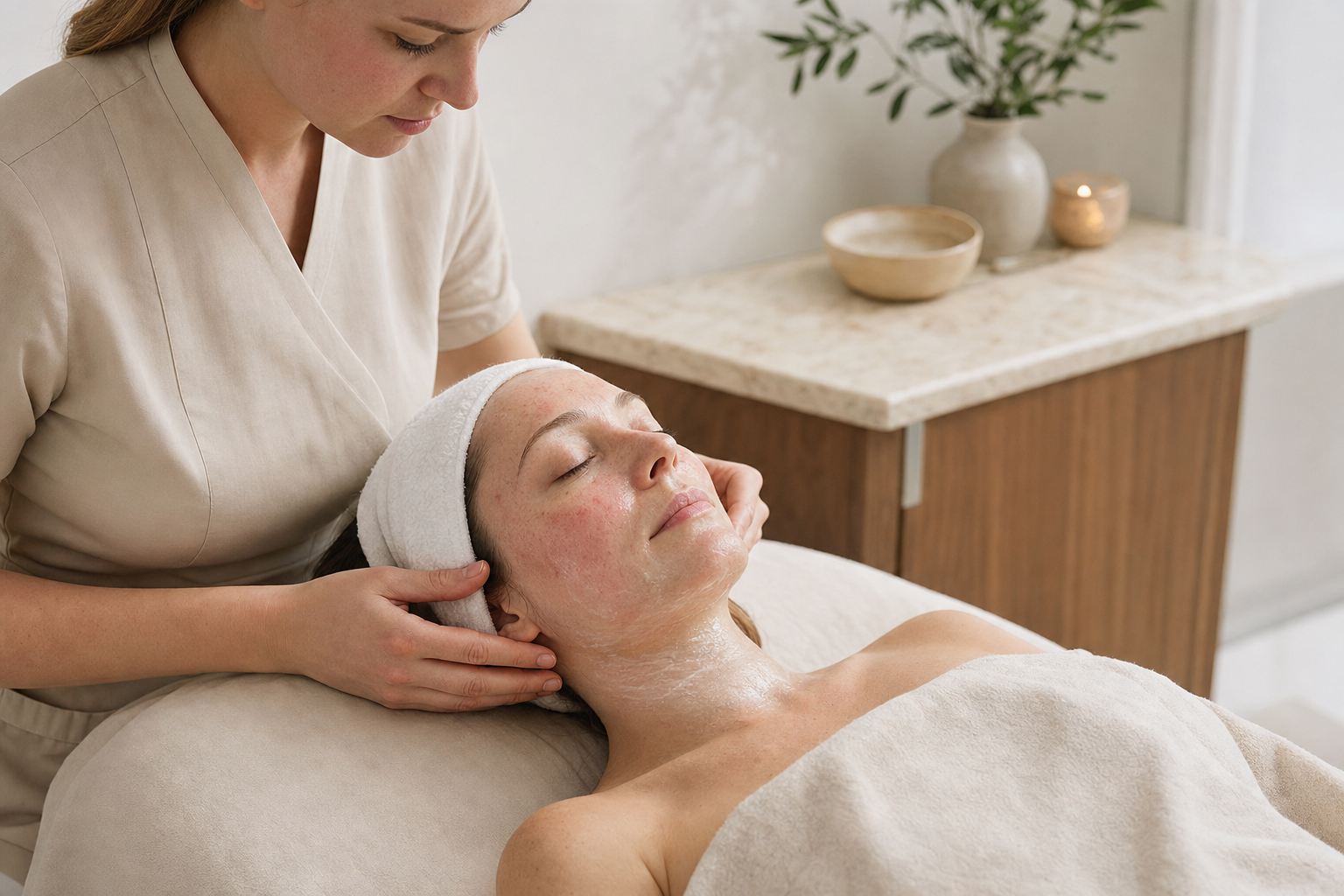
Imagine a client in Bangkok after several days of humidity, sunscreen reapplication, indoor air conditioning, late nights, and one enthusiastic acid toner that the skin did not enjoy. The cheeks are pinker than usual, the nose and chin feel both dry and shiny, and the client has an evening event tomorrow. This is one of the most common real-life versions of a search for facial for sensitive skin: the face is not severely diseased, but it clearly does not want a heroic reset.
The best treatment in that window is usually diagnosis-led and conservative. A therapist may choose a creamy cleanse, very limited exfoliation or none at all, a soothing mask, short calming massage, hydration that does not feel greasy, and a finish that looks polished without loading the skin. This is also one of the few places where the anchor best facial bangkok is editorially justified. The article is specifically discussing premium facial decision-making in Bangkok, where climate and schedule can make sensitivity louder. Readers managing the same environment may also want Facial Bangkok Skin Climate Routine.
The success metric is not maximum glow at any cost. It is a face that looks calmer, smoother, and less unpredictable by the time the client leaves, while still feeling trustworthy for the next twenty-four hours. Bangkok puts enough load on the skin through heat, movement, and indoor cooling. A facial that adds more irritation in that context is not luxurious. It is simply badly judged.
How different sensitive-skin profiles change the plan
Dry-reactive skin usually needs the most comfort. It often dislikes foaming cleansers, hot towels, strong acids, and long treatments that let product dry down into drag. The right facial usually leans into emollient support, softer pressure, and shorter treatment arcs. Oily-reactive skin needs a more nuanced balance. The face may still want a cleaner surface and lighter textures, but it should not be stripped into temporary matte calm. Shine and sensitivity often live together. The plan should target the areas of buildup without treating the entire face like a problem zone.
Mature-sensitive skin often benefits from slower pace, more slip, and fewer treatment swings. The goal is not to chase every line with activity. It is to improve texture, comfort, and reflected light while keeping the skin calm enough to enjoy those benefits. Over-exfoliated or post-trend skin is another category altogether. If the client has been stacking acids, retinoids, scrubs, or strong masks, the facial should become a recovery session rather than another performance. In many cases, the most intelligent step is to stop stimulating and start rebuilding.
This is why a one-size-fits-all "calming facial" can still fail sensitive clients. The label sounds safe, but the execution may not be. A provider who understands reactive skin should adapt the same room, products, and minutes differently for a dry barrier-compromised face than for an oily but flushing one. Premium treatment is custom pressure, custom pacing, and custom omission.

The home routine that protects the result
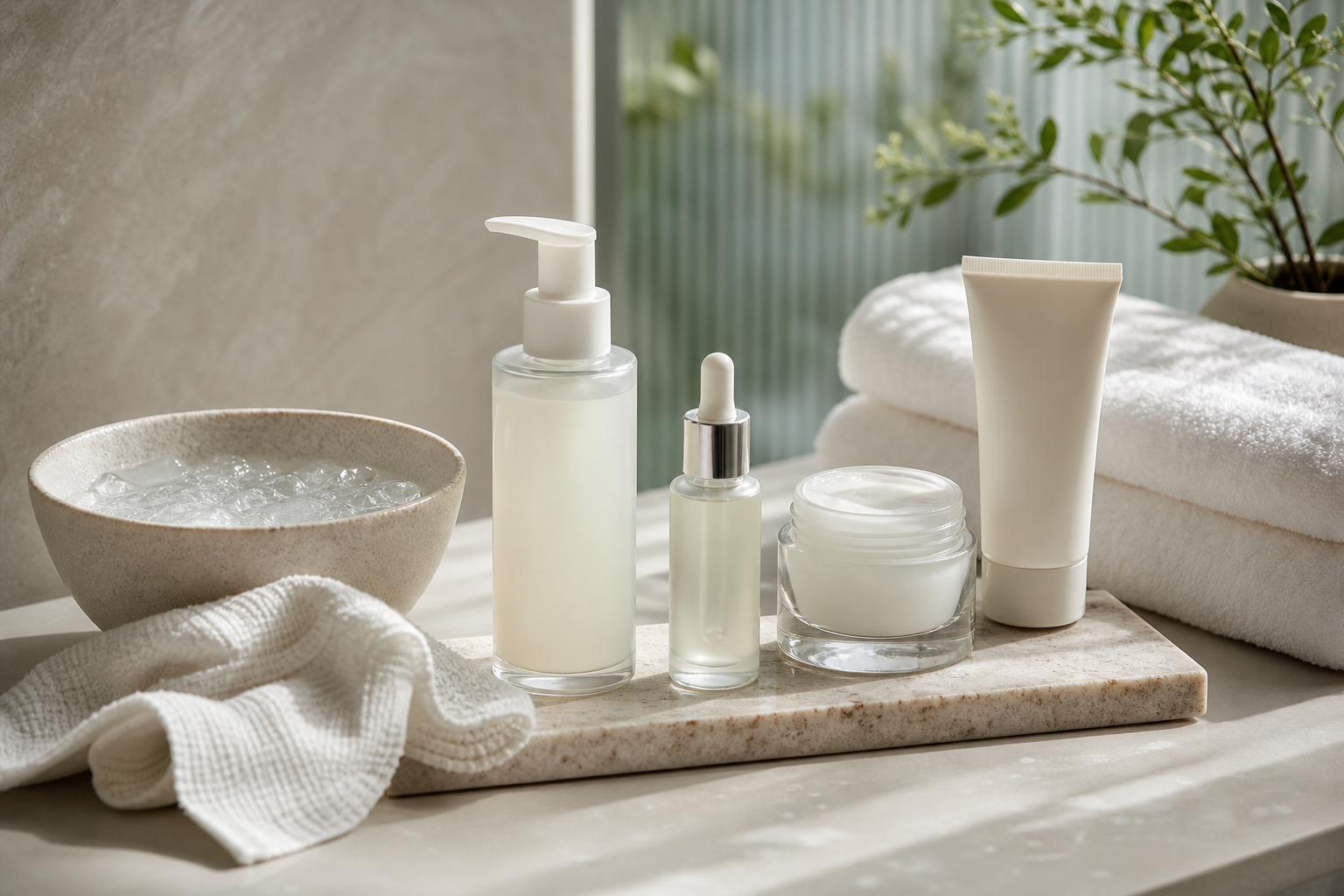
The facial is only half the story. Sensitive skin keeps its results when the next seventy-two hours are quiet. Cleanse gently if needed, moisturize before the face feels desperate, and wear sunscreen every day. The American Academy of Dermatology repeatedly brings skin care back to these basics because they remain the fastest way to reduce avoidable irritation. A sensitive-skin facial can make the skin look better, but a rough cleanser, hot shower, or immediate return to strong actives can flatten that result almost immediately.
This is where Skin Barrier Repair Routine becomes the practical follow-up to the treatment room. The face often needs fewer variables, not more. A calming serum, a moisturizer that matches the skin's dryness level, and consistent sunscreen usually outperform a complicated recovery shelf. If the client wants to reintroduce more active products, patch testing and spacing help protect against confusion. The AAD testing guidance is especially useful for people who say they never know what their skin is reacting to.
One of the most expensive sensitive-skin mistakes is equating luxury with novelty. A better post-facial routine usually looks almost boring: no scrub, no extra peel, no new fragrance oil, no aggressive cleansing brush, no urge to "finish the job." Premium results tend to last longest when the client resists the urge to improve them.
The mistakes that keep sensitive skin angry
The first mistake is over-cleansing. People with reactive skin often try to remove every trace of shine, sunscreen, or city residue and end up stripping comfort out of the barrier. The second mistake is treating redness as proof that a treatment is working. Sensitive skin does not need to be pushed into visible stress to justify the appointment. The third mistake is fragrance optimism: assuming that something botanical, spa-like, or natural-smelling must be calming. Sensitive skin reacts to many different triggers, and scent can be one of them.
The fourth mistake is letting trends outrank timing. A skin-cycling phase, a peel pad, a brightening mask, and a last-minute facial may all be reasonable on their own, but together they can create the exact reactivity the client then tries to repair. The fifth mistake is provider selection by menu name. A "sensitive facial" is only as good as the person adjusting temperature, pressure, timing, and ingredients. Without that judgement, the label is decorative.
The sixth mistake is forgetting that climate, travel, and stress count as treatment variables too. Humidity, air conditioning, poor sleep, and long workdays can make the same routine feel harsher than usual. Sensitive skin behaves better when the whole week is taken into account, not just the hour in the treatment room.
When to skip the facial or ask a dermatologist instead
A facial for sensitive skin is still a cosmetic and wellness service. It is not a replacement for medical care when the face is suddenly swollen, painful, broken, infected, intensely itchy, or reacting in a way that suggests true dermatitis, allergy, or another skin condition that needs clinical evaluation. DermNet's sensitive-skin and irritant-contact-dermatitis resources are useful reminders that not every uncomfortable face should be treated like a beauty inconvenience.
The same caution applies when the skin is freshly sunburned, recently resurfaced, or clearly irritated by strong actives. In those moments, the premium move may be to postpone the facial and spend several days rebuilding comfort first. A therapist who says no at the right moment is protecting the client, not losing value. That kind of judgement is often more impressive than a longer treatment list.
Sensitive skin responds best to honesty. If the face needs recovery, a calm facial may help it look better and feel steadier. If the face is signaling disease, injury, or a true inflammatory flare, the better answer is a qualified clinician. Luxury should never depend on pretending those situations are the same.
Conclusion: the most premium result is a face that still trusts you tomorrow
A facial for sensitive skin can be genuinely worthwhile because it solves a real problem: the face wants support, but it has very little patience for over-treatment. The strongest sessions are usually the least theatrical. They cleanse properly, restore slip, soften visible irritation, and stop before the barrier has to defend itself.
For SKINEGA, the luxury standard is simple. Reactive skin should leave looking calmer and still feeling comfortable. If the provider respects timing, pressure, product choice, and the difference between recovery and stimulation, sensitive skin can look polished without being pushed. That is the kind of result worth repeating.
Explore the SKINEGA facial treatment cluster
Start with the Best Facial Treatment for Every Skin Concern, then continue by skin concern, treatment method, timing, or aftercare.
- Kobido Facial for Mature Skin
- Facial Massage and Lymphatic Drainage
- Best Facial Bangkok
- Best Facial for Acne-Prone Skin: A Premium Guide to Congestion, Breakouts, and Barrier-Safe Care
- Hydrafacial vs Facial: How to Choose the Right Premium Treatment for Your Skin
- Best Facial for Dehydrated Skin: Restore Comfort, Bounce, and Barrier-Safe Glow
- Facial for Redness: A Calm, Barrier-Safe Guide to Choosing Treatment Without Overstimulating Skin
- Facial After Exfoliation: When to Wait, What to Avoid, and How to Protect Your Skin Barrier
- Best Facial Before an Event: A Timeline for Predictable Glow Without Last-Minute Irritation
- Facial Aftercare: The First 72 Hours for Calm, Comfortable, Longer-Lasting Results
- Best Facial for Men: A Practical Guide to Shaving, Congestion, Hydration, and Grooming
FAQ: facial for sensitive skin
What is the best facial for sensitive skin?
The best facial for sensitive skin is usually the one that removes the most irritation risk, not the one with the longest menu. In practice that often means gentle cleansing, low-friction hydration, limited massage, and very selective exfoliation or none at all. A good provider should ask what recently made the skin sting, flush, tighten, or peel before deciding what to do. Sensitive skin responds well to thoughtful omissions. If the skin barrier is already unhappy, a shorter calming session can be far more useful than a stronger treatment that chases quick glow. The real test is whether the skin still feels comfortable later that day and the next morning.
Can sensitive skin get a facial before an event?
Yes, but timing and restraint matter. If the event is within a day or two, sensitive skin usually does best with a conservative facial that focuses on comfort, smoothness, and calmer tone rather than heavy resurfacing. That often means no dramatic peel, no aggressive extraction, and no strong new products. The goal is for makeup to sit better or for the face to look polished on its own, not for the skin to go through a visible recovery cycle before the event. If the skin has been reactive that week already, it can be smarter to simplify the routine at home and postpone anything more active until after the event. Calmer usually photographs better than risk.
Is a hydrafacial good for sensitive skin?
It can be for some people, but only when the session is scaled carefully. A hydrafacial-style treatment may help when the face has mild buildup, surface roughness, or dullness that can be improved with controlled cleansing and hydration. The problem starts when a machine name is treated like a universal answer. Sensitive skin may need fewer passes, gentler suction, lighter extraction, or a completely different treatment family if the barrier is already irritated. The better question is not whether a hydrafacial is good in theory, but whether the provider can adapt it intelligently to the exact kind of reactivity the face is showing today. Sensitive skin likes precision more than branding.
What should I avoid after a facial for sensitive skin?
Keep the next few days simple. Avoid scrubs, stronger acids, retinoids, hot water, rough towels, heavy heat, and the urge to test new products just because the skin looks better. Sensitive skin usually holds onto its post-facial improvement longer when the home routine stays quiet: gentle cleansing only as needed, moisturizer that matches the skin, and daily sunscreen. If you want to restart active products, give the face time to settle and reintroduce slowly. This is also a sensible time for patch testing if you are unsure how your skin handles a formula. A premium facial can improve the skin quickly, but reactive skin often loses that benefit through enthusiastic aftercare rather than through the treatment itself.
How do I know if my skin is too reactive for a facial right now?
If the face is actively burning, very itchy, visibly swollen, sunburned, broken, freshly peeled, or reacting in a way that feels unusual or alarming, it may be too reactive for a cosmetic facial that day. The same applies when the skin has recently had a bad response to a peel, retinoid, or another treatment and has not yet stabilized. A skilled provider should be willing to postpone, simplify, or recommend medical guidance when needed. That is not a failure. It is good judgement. Sensitive skin does best when the line between beauty care and medical care stays clear. If you are unsure, the safer move is usually to rebuild comfort first and return for a facial when the skin feels more predictable.
Editorial sources and further reading
- American Academy of Dermatology - Face washing 101
- American Academy of Dermatology - How to test skin care products
- American Academy of Dermatology - Dermatologists top tips for relieving dry skin
- American Academy of Dermatology - How to pick the right moisturizer for your skin
- DermNet - Sensitive skin
- DermNet - Irritant contact dermatitis